BLOG 4 OF 5: WE'RE NOT RUNNING OUT OF LAND. WE'RE RUNNING OUT OF COMMON SENSE.
WHO SOLD US THE FARMLAND SHORTAGE STORY?
Here's something fascinating about the perception of lack. As we discussed in the last blog, we're constantly being told there isn't enough. Not enough money. Not enough food. Not enough resources. And apparently, not enough farmland. What's particularly interesting about this story is that the people repeating it are often the ones who genuinely mean well. Protect our farmland! Stop development! Save agriculture! And they're right about one thing. We absolutely need to protect agricultural land. But somewhere along the way, protecting farmland became the conversation, while actually putting people on that land to grow food became almost an afterthought. Who sold us that story? Organizations like the Ontario Federation of Agriculture, through its Home Grown campaign, and Ontario Farmland Trust have repeatedly highlighted the loss of approximately 319 acres of Ontario farmland every day between 2016 and 2021. That number comes from Statistics Canada. The loss is real. But there's another side of the story that deserves just as much attention. In 2021, Niagara had 208,414 acres of farmland. Ontario's own economic snapshot also identified 63,809 acres of potential unused farmland. Not all of that land is necessarily available or suitable for cultivation. But wouldn't you think identifying what could be put into production would be a priority? Now look at what Niagara's agricultural economy actually consists of. According to the 2021 agricultural census:
- 342 oilseed and grain farms, a category that includes commodity corn and soybeans.
- 75 vegetable and melon farms.
- 480 fruit and tree nut farms, down 67 since 2016.
- 163 greenhouse operations, with nearly 63% of greenhouse growing space dedicated to potted plants rather than food.
And here's another distinction worth making. Nationally, approximately 89% of grain corn and 88% of soybeans planted in Canada in 2024 were genetically modified. And don't even get me started on the environmental consequences of the industrial farming systems surrounding these crops, including herbicide-resistant weeds, declining biodiversity and the loss of healthy soil ecosystems. We've devoted enormous amounts of land to producing agricultural commodities while leaving the long-term ecological costs of intensive monoculture largely outside the conversation. These crops supply enormous agricultural commodity markets, including livestock feed, processed food ingredients, industrial products and exports. And then we have the nerve to tell people that eating meat is the problem, while giving nowhere near enough attention to what we're feeding those animals, how that feed is produced and the environmental damage associated with intensive industrial agriculture. Perhaps we should be questioning the entire production system before pointing fingers at what's on someone's dinner plate. Growing agricultural commodities and growing fresh, nutritious food for our communities are not the same objective. So why do we measure the success of our agricultural economy by acres planted and dollars generated instead of how many people we're actually feeding? Meanwhile, Niagara lost 176 farms between 2016 and 2021. Our farm operators averaged 57.3 years of age, and only a small percentage of farms reported having written succession plans. So when I say we need more farmers, I'm talking about people growing vegetables, fruit, herbs, raising animals for food and creating diversified farms that directly nourish their communities. People who can earn a living producing food. And this is where the whole conversation gets particularly interesting. The United Nations Food and Agriculture Organization has reported that farms smaller than two hectares produce approximately 35% of the world's food while operating on just 12% of agricultural land. The FAO also recognizes agroecology, diversified production and community-based food systems as important pathways toward a more resilient food supply. In other words, the research is already there. We know smaller, diversified farms can make an enormous contribution to food production. We know communities benefit from stronger regional food systems. We know access to land, infrastructure, training and reliable markets are major barriers for aspiring farmers. And yet, after years of government studies, agricultural strategies, economic development plans and food security discussions, where is the coordinated effort to actually put new food growers on the land? Imagine identifying suitable underused farmland throughout Niagara. Connecting landowners with people who want to grow food. Providing practical education, affordable startup opportunities and guaranteed pathways to market. Imagine 100 new small farms. Then another 100 the following year. And building the purchasing, processing and distribution infrastructure to support them. That's not simply an agricultural strategy. That's an economic strategy. Because food is the foundation of an economy. Before complicated financial systems, government programs, grants and corporate profits, people needed food. Food creates tangible value. It feeds families, supports businesses, employs people and circulates money throughout communities. Food is a currency. And here's where that perception of lack becomes so important. If we convince ourselves that we're running out of everything, we naturally start looking toward the institutions promising to manage whatever remains. But what happens when we start looking at what we already have? Land. Knowledge. People. Demand. Opportunity. What if our greatest problem isn't scarcity, but the way we've organized access to abundance? I'm not suggesting farmland loss isn't serious. It is. I'm suggesting we've allowed one legitimate problem to dominate the conversation while overlooking another. We don't just need to save farmland. We need to make it possible for ordinary people to become food producers again. And perhaps the greatest agricultural crisis isn't simply the land we're losing. It's the food economy we haven't bothered to build with the land we still have. The people fighting to protect farmland are fighting for something important. But the people with the authority, funding and resources to help establish new food growers need to be answering a different question. Why are we still spending so much time studying what we lack instead of putting what we have to work? Interesting, isn't it? Maybe it's time we build an economy of our own. Clearly theirs isn't working.
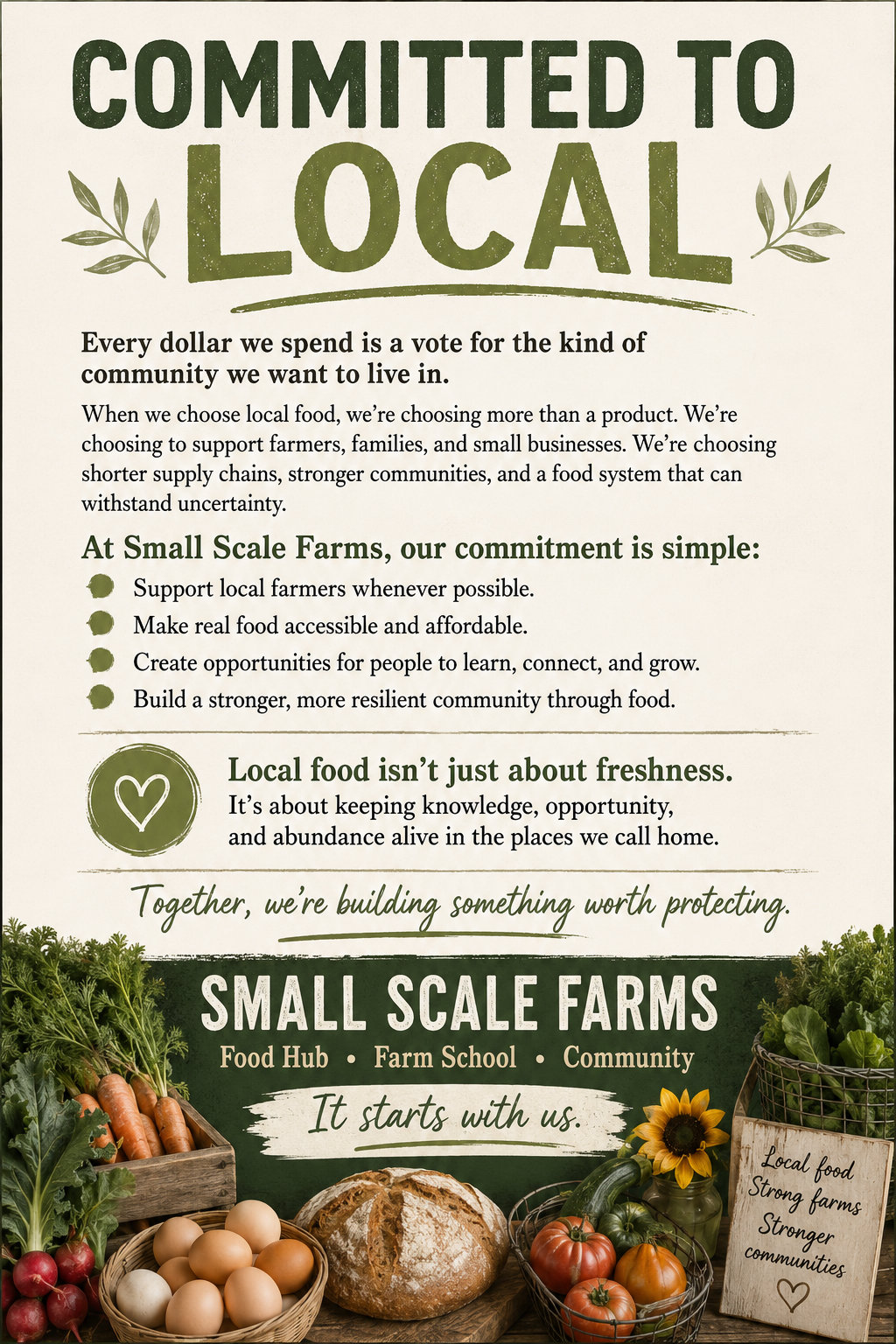
Locally yours, Small Scale Farms
Sources
|