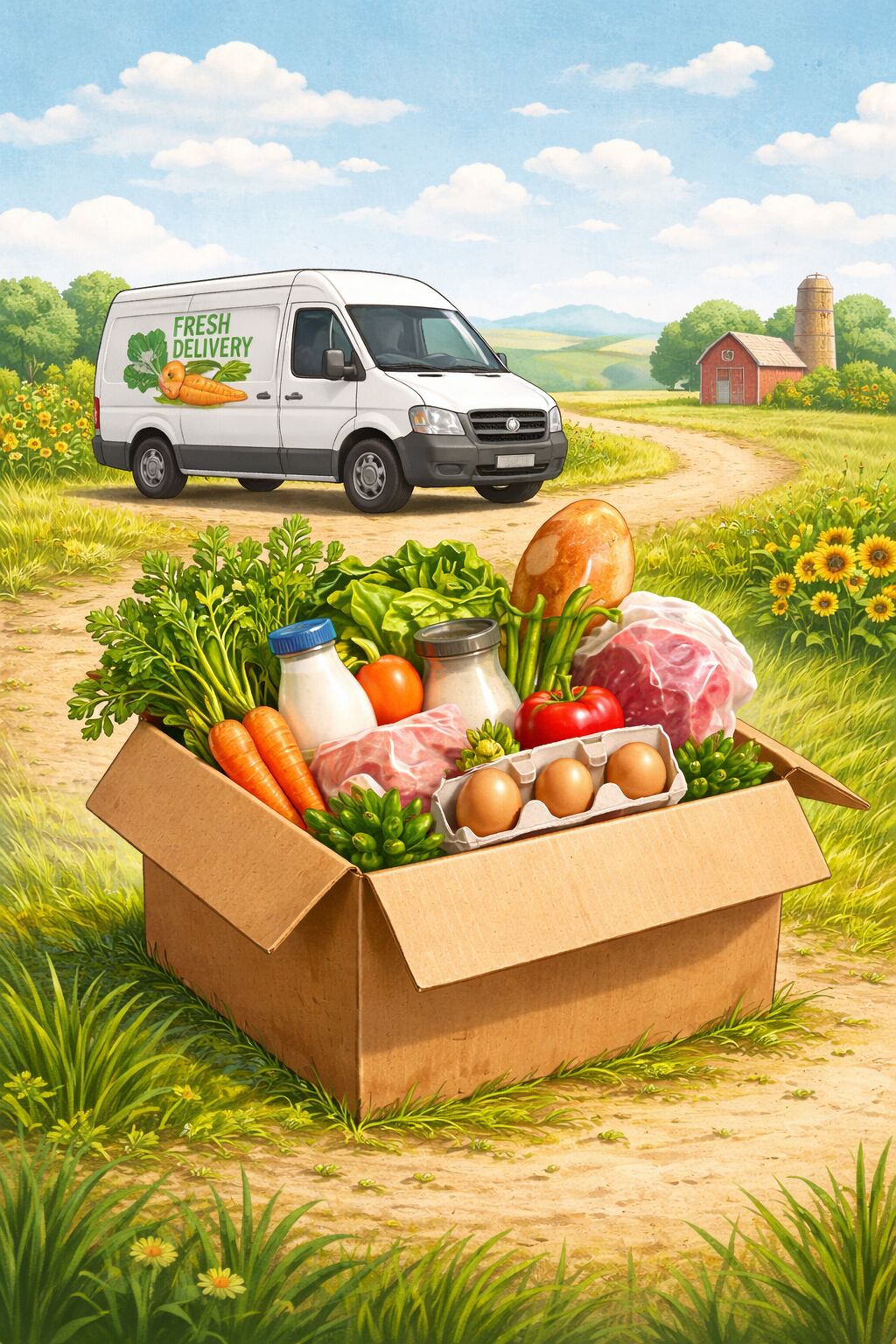
It's easier than ever to order online and have us delivered. The goal has always been real simple - make real food easier to get.
Please note: Everything in this newsletter is available for free delivery, and we update it regularly based on what’s in stock at the hub. Please read all details on free delivery page before ordering - min $30 order.
New to Small Scale Farms? Enter 10%OFF before you check out and save 10% off your entire order - AND have us delivered for free!
|
|
|
|
FARM SHARE NIAGARA - LAST CHANCE
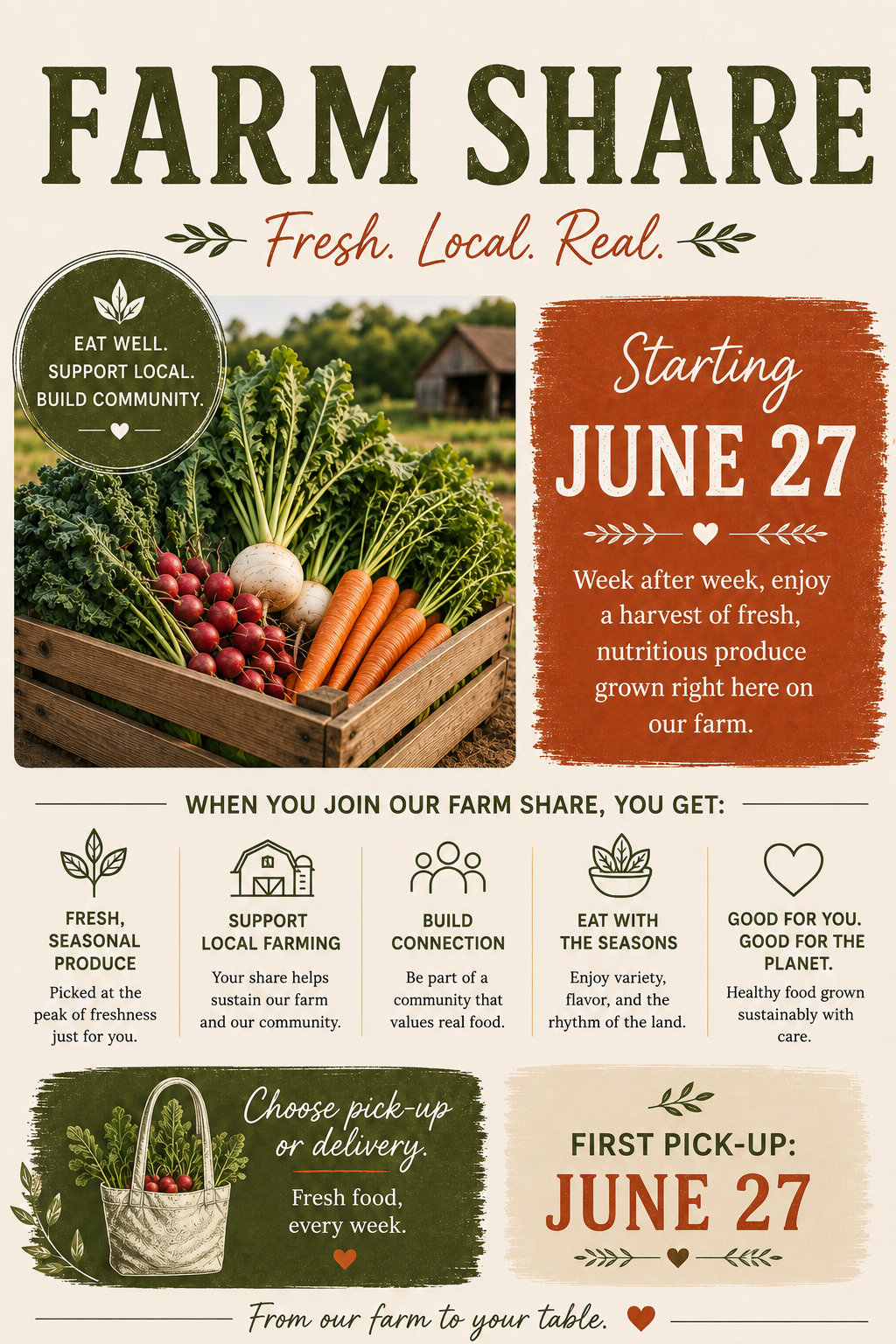
For 12 weeks, you don’t have to think about where your food is coming from. Every week, a box shows up at your door — fresh, local, real food.
No wandering grocery stores. No guessing what’s in season. No last-minute “what are we eating tonight?”
Just food that’s already been chosen, grown, and ready when you are.
|
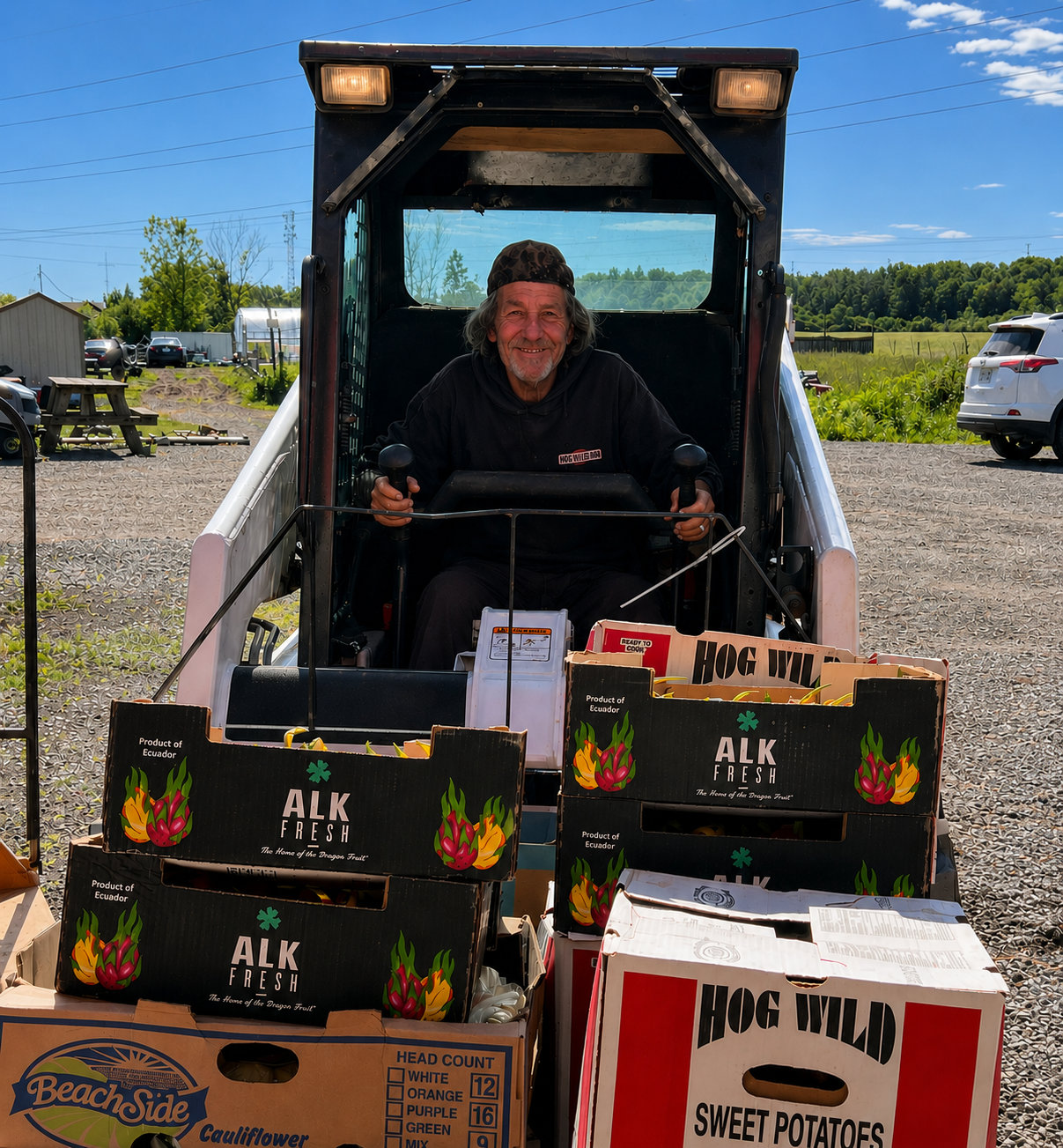
I am so thankful for everyone that has helped us get to this point where a truck shows up, unloads with a bobcat, and gets pump jacked into our fridge. I just can't stop thinking about how grateful I am that we don't have to keep juggling, (and losing) produce. Huge shout out to Norm for coming by and helping us with our first load in through the back door.
|
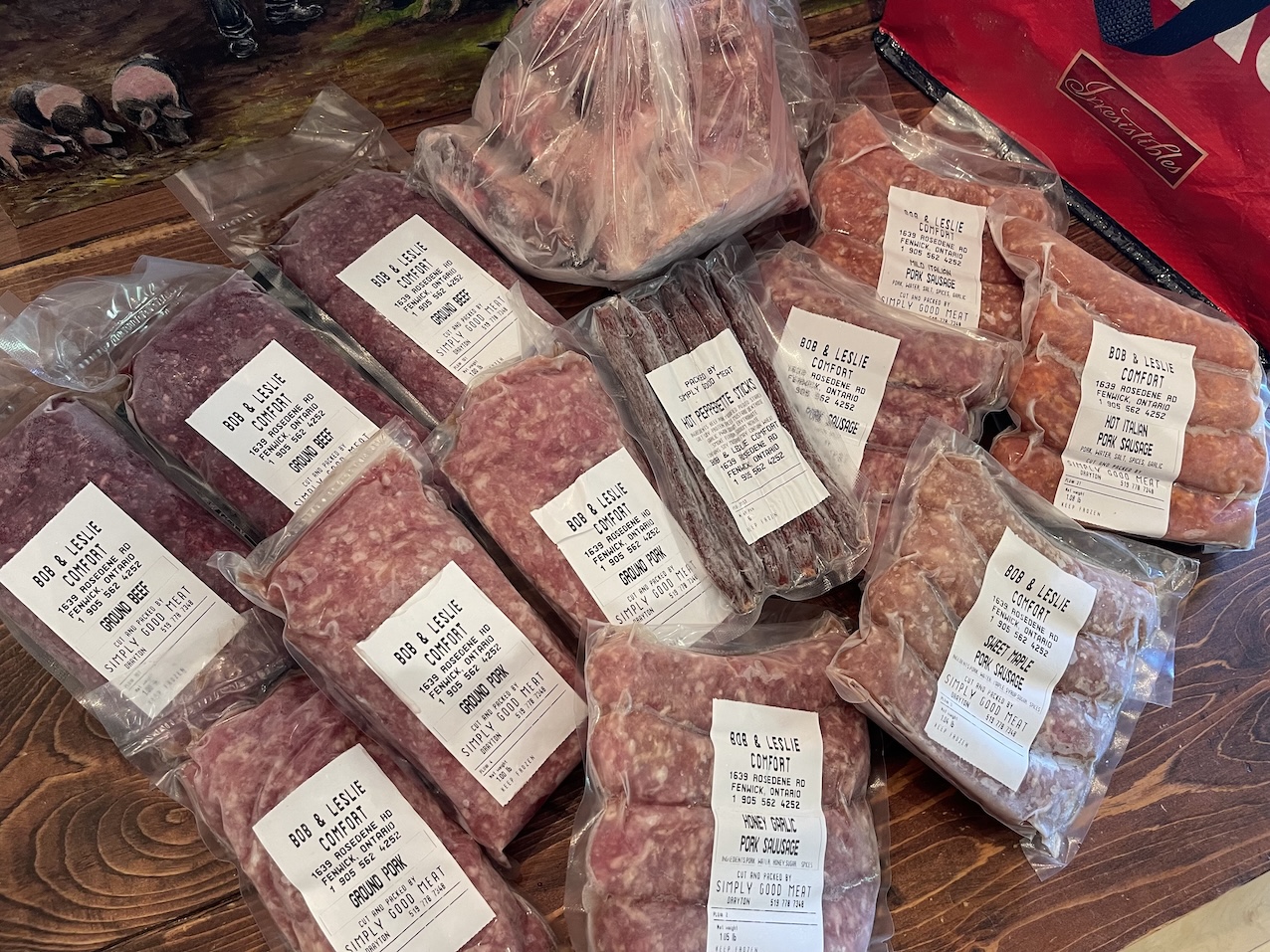
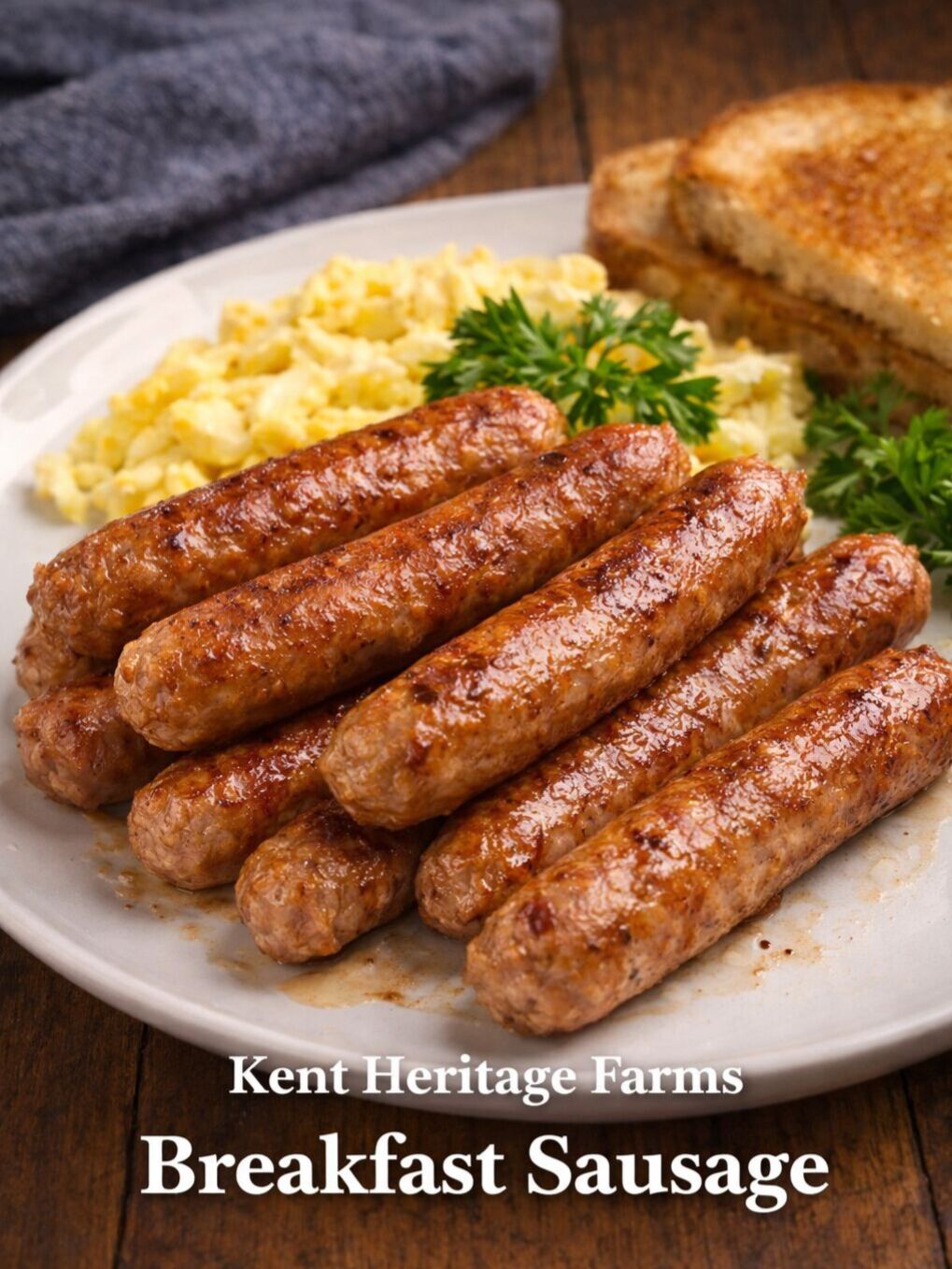
Sausage and Burger Lover Package You don't want to miss!
|
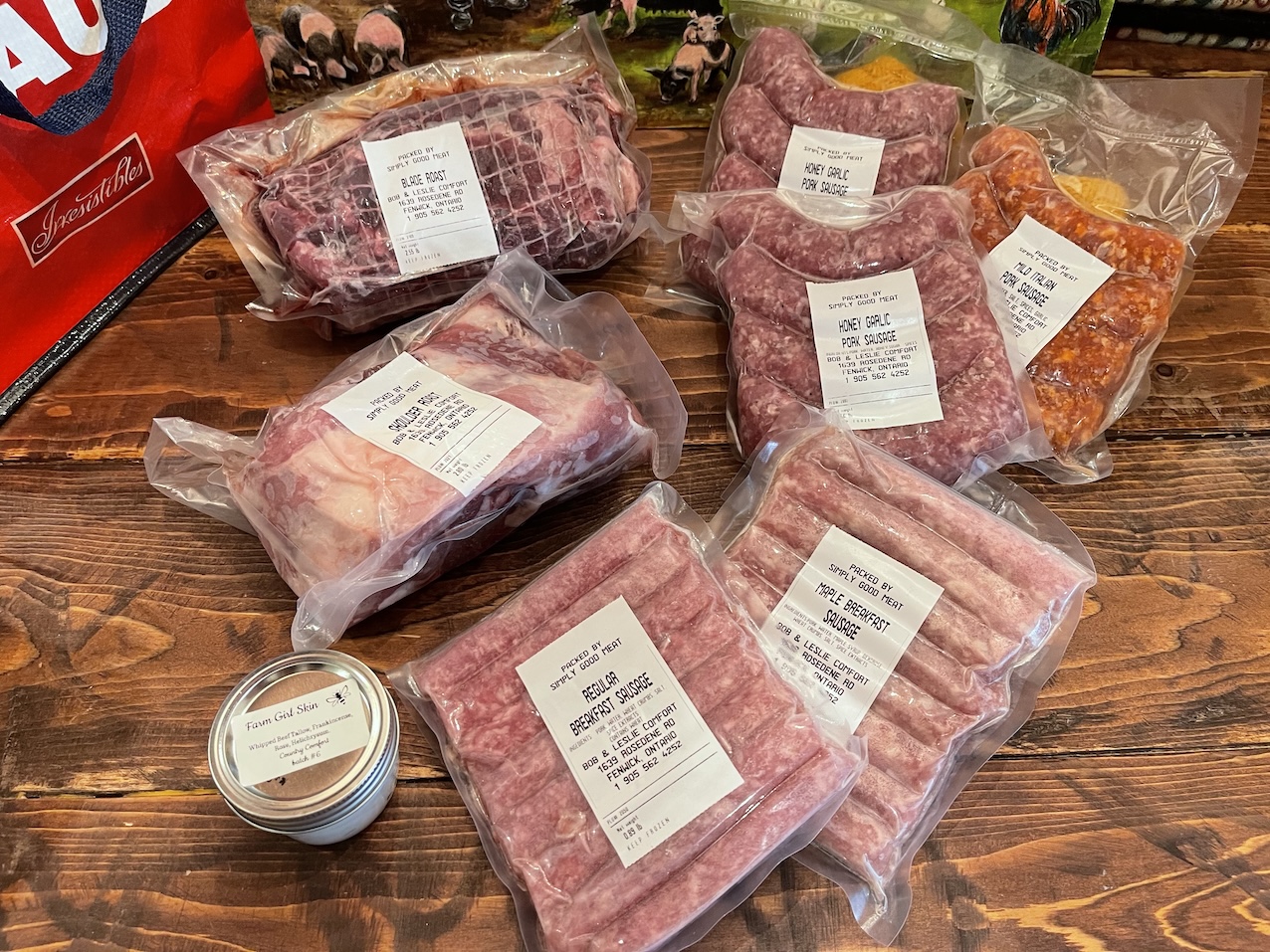
Looking to stock the freezer this Summer? If you're a sausage and burger lover, this bundle was built for you. Five flavours of Comfort sausage, 3 lb of ground beef, 3 lb of ground pork, pepperettes, and for a limited time, 3 lb of broth bones included free. Raised without antibiotics or added hormones, it's one of the easiest ways to stock the freezer and save $45 while you're at it.
|
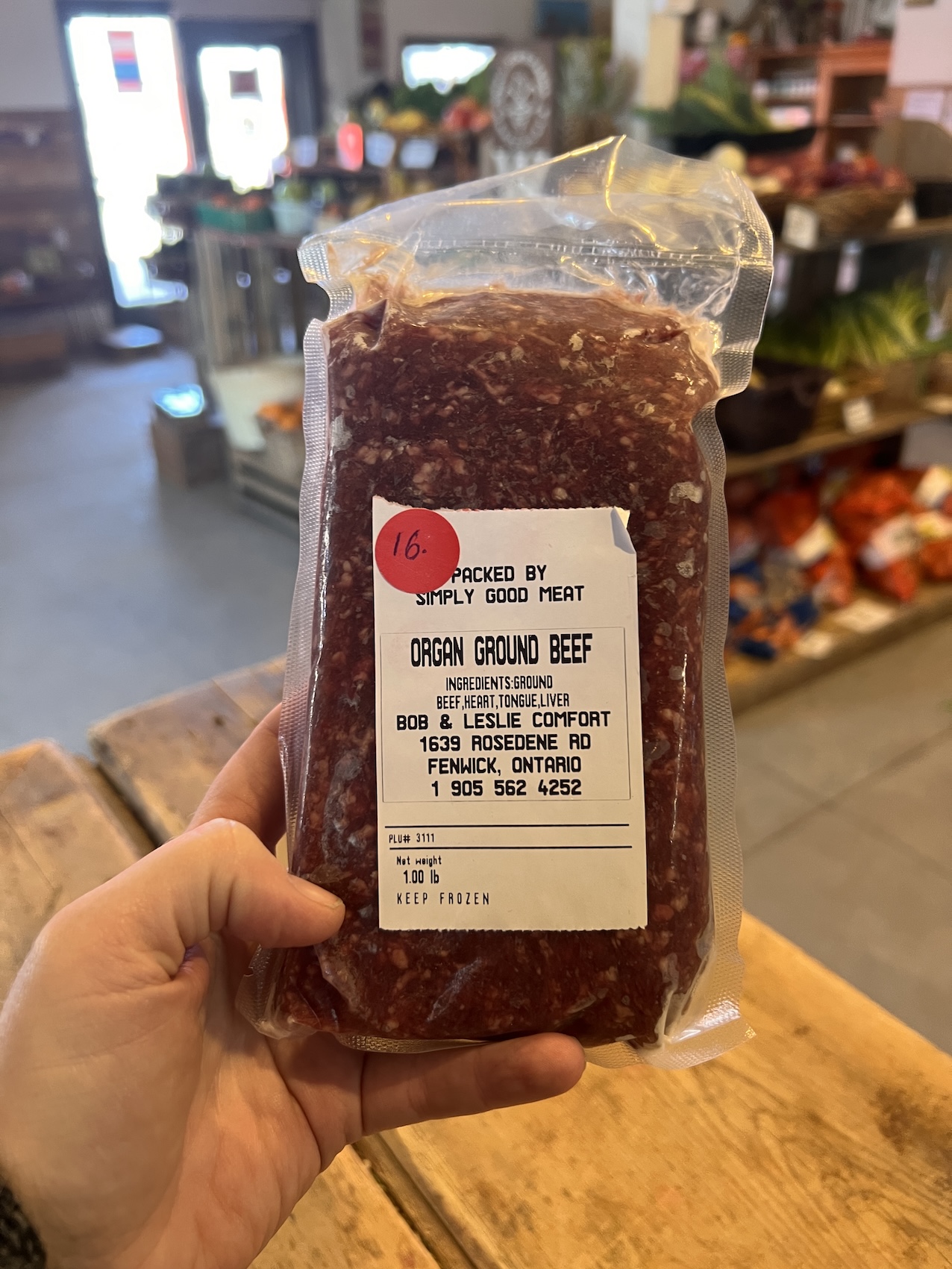
Comfort Farms Organ Ground Beef is a nutrient-dense blend made with ground beef, heart, tongue, and liver from naturally raised cattle right here in Niagara. A simple way to add more real nutrition into everyday meals without sacrificing flavour. Perfect for burgers, tacos, pasta sauce, meatballs, or chili, this blend is rich in protein, iron, B vitamins, and minerals while still tasting like traditional ground beef.
|
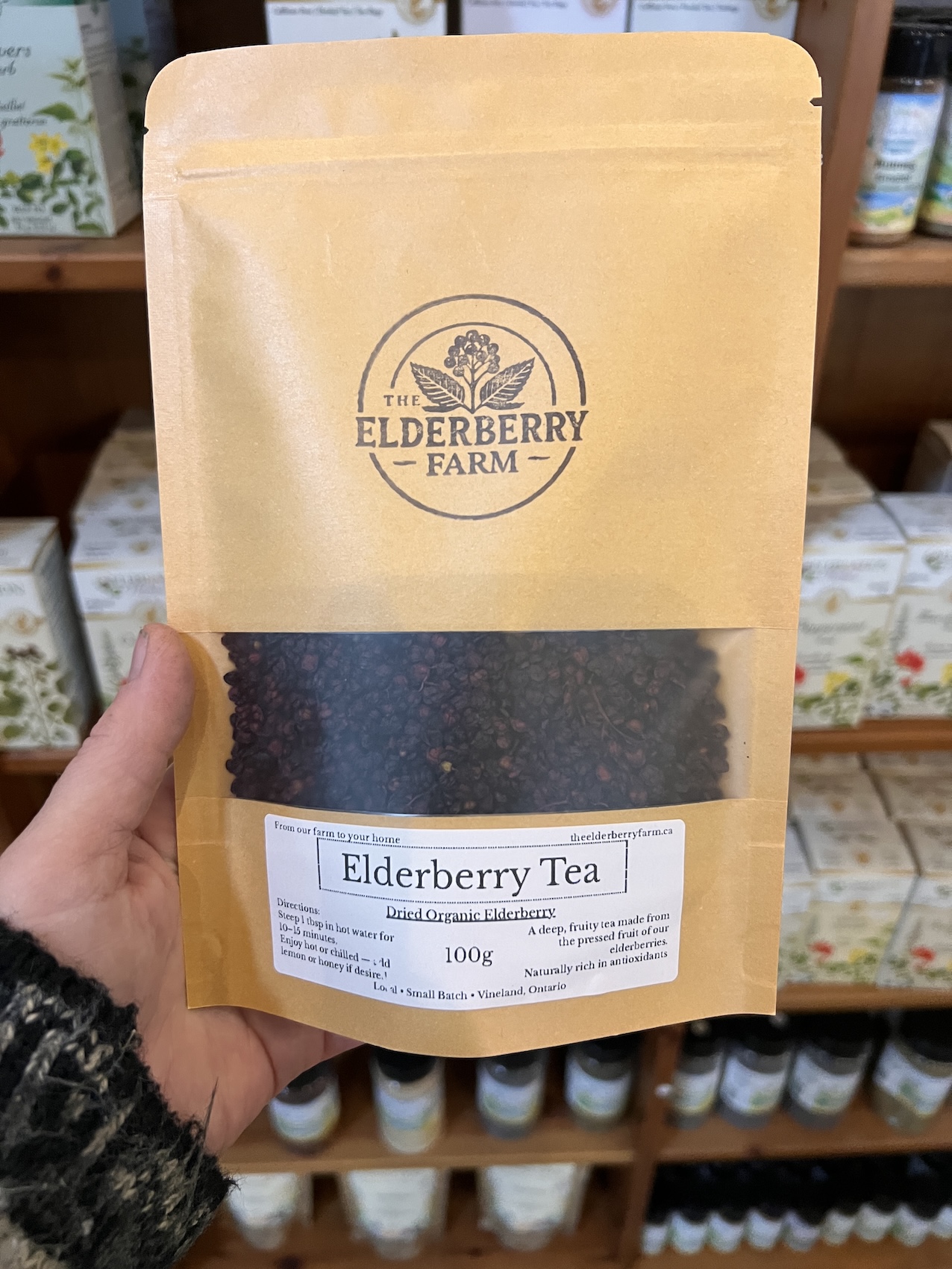
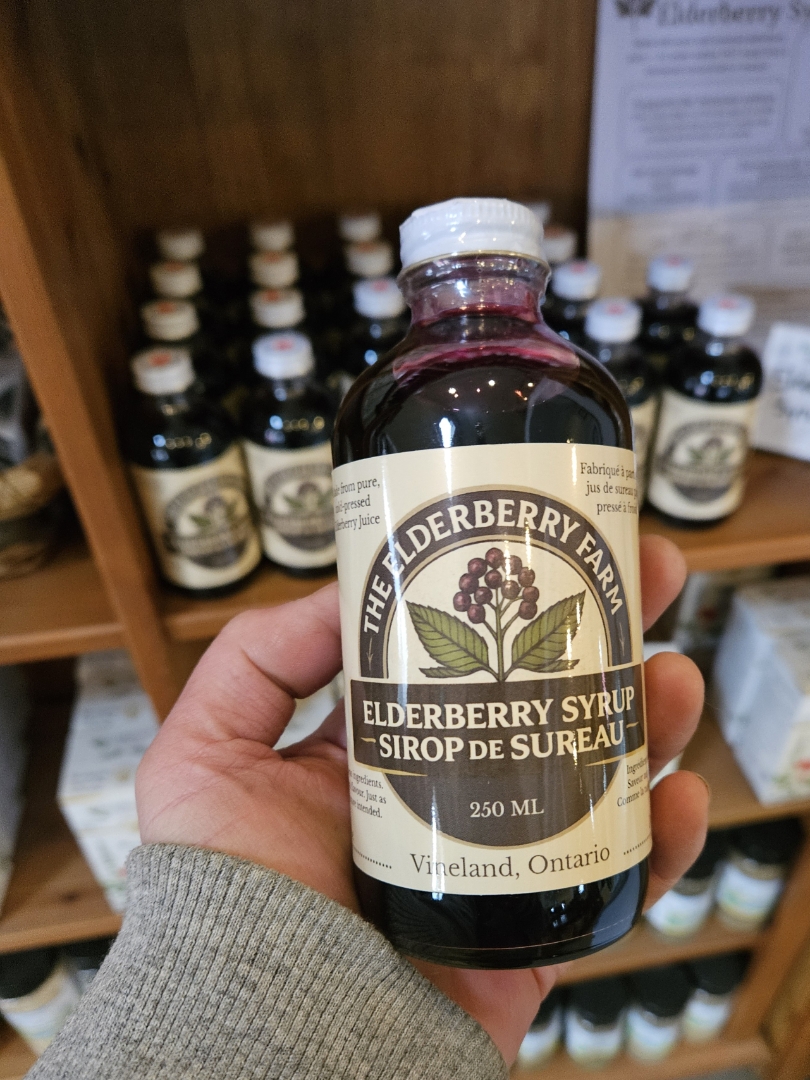
Organic Dried Elderberries – 100g Grown and dried locally in Vineland, Ontario by The Elderberry Farm. These organic elderberries are rich, vibrant, and traditionally used for homemade syrups, teas, tinctures, and seasonal wellness recipes. A pantry staple for many families looking to support their immune system naturally and keep simple herbal traditions alive year-round. 100% dried organic elderberries. No fillers or additives.
|
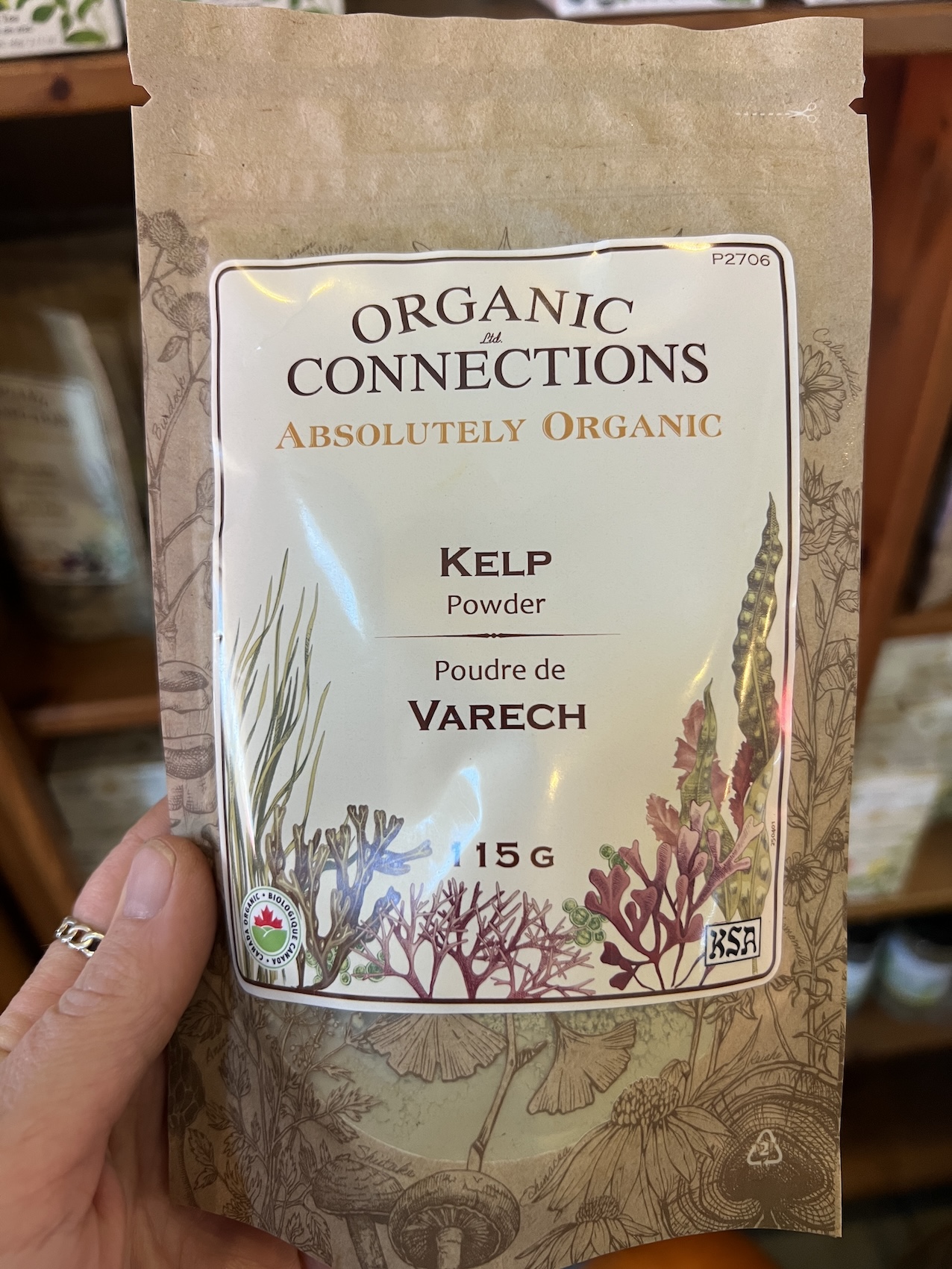
Kelp is one of those simple, powerful things people have been using for generations. Rich in minerals like iodine, it’s often used to support energy, metabolism, and overall balance — the kind of small addition that can quietly make a difference over time. For generations, people have turned to plants, roots, berries, and herbs as part of everyday wellness. It doesn’t have to be complicated. Sometimes it’s just one small shift — a daily tea, a mineral-rich add-in like kelp, or learning what your body actually responds to. If something’s been off, it may be worth exploring natural options, doing your research, and seeing what fits your routine. Start small, stay consistent, and pay attention to how you feel. One cup a day. One better choice at a time. Our Organic Connections corner is fully stocked at the Hub right now if you’ve been wanting to try something new. We’ve also added a few items to the free delivery page.
|
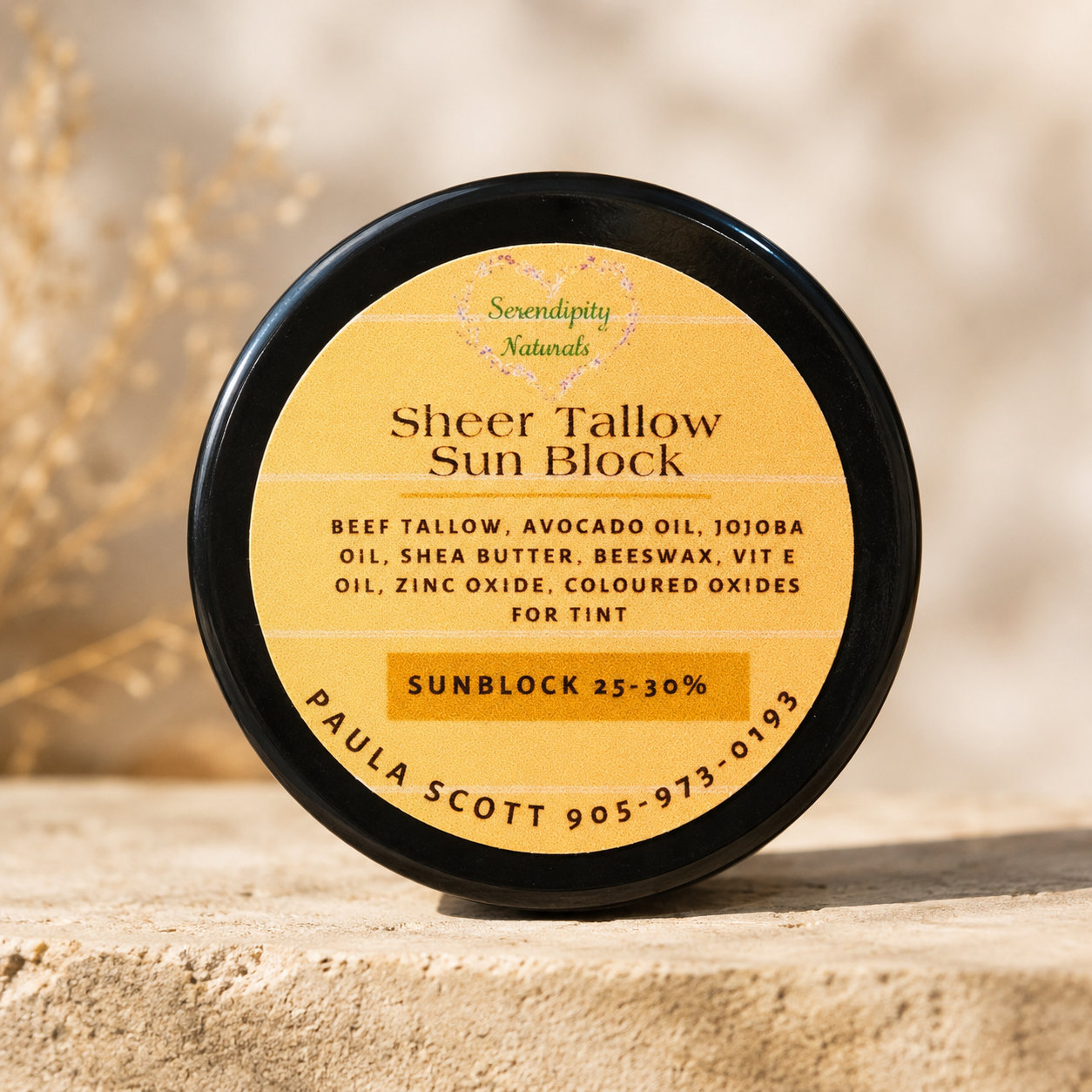
New! Sheer Tallow Sun Block! A nourishing tallow-based sun block made with beef tallow, avocado oil, jojoba oil, shea butter, beeswax, vitamin E, and non-nano zinc oxide. Naturally tinted and handcrafted in small batches to help protect and moisturize skin during time spent outdoors.
|
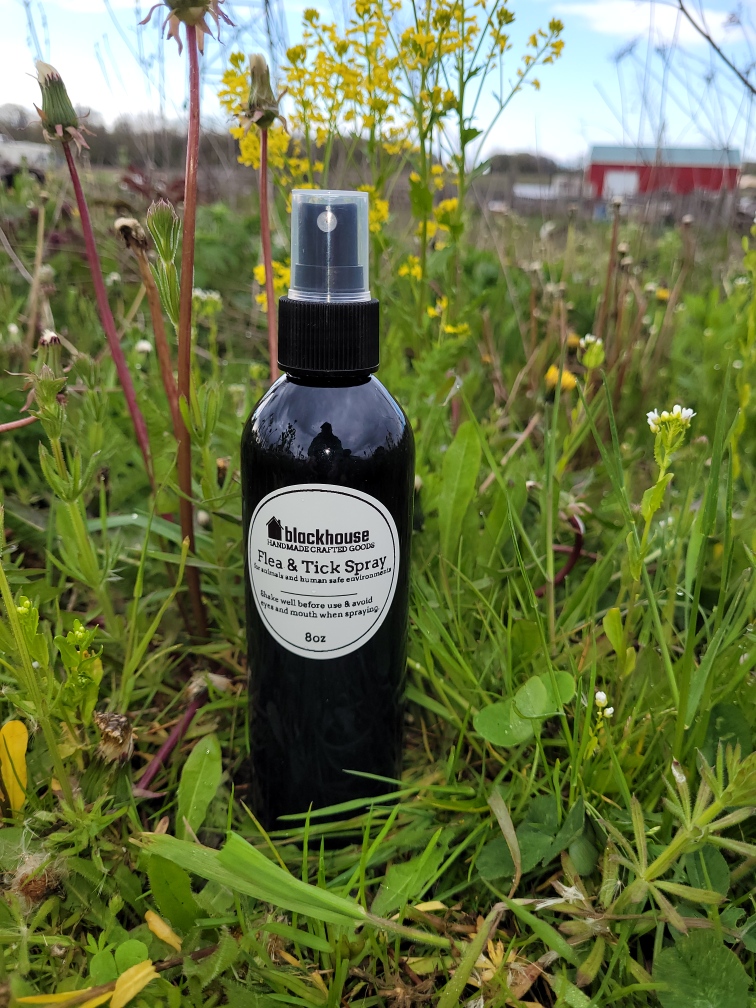
Our natural Flea + Tick Spray is made with a simple blend of geranium oil, neem oil, and apple cider vinegar to help naturally deter fleas and ticks without harsh chemicals. Geranium oil is traditionally used to repel insects, neem oil is known for its natural pest-deterring properties, and apple cider vinegar helps support a healthy coat and skin environment. Perfect for dogs, outdoor adventures, hikes, farm life, and everyday prevention during flea and tick season. Lightly mist onto your dog’s coat before heading outside, avoiding eyes and sensitive areas. Simple ingredients. Real protection. No unnecessary chemicals.
|
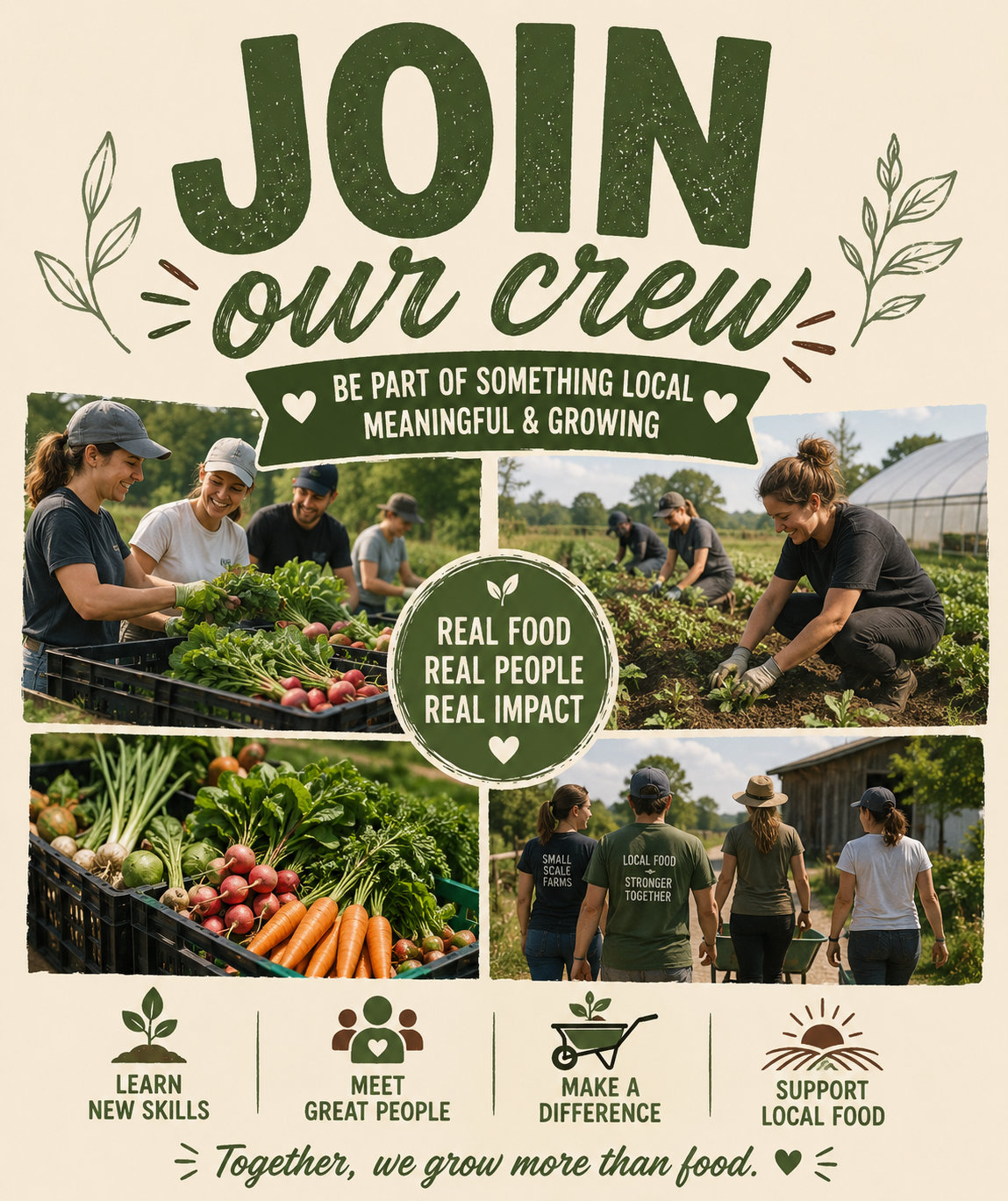
We’re quietly building something bigger than a grocery store.
A crew of people who understand that food matters, community matters, and where your food comes from is going to matter more and more in the years ahead.
Being close to the source changes things.
You learn more. You eat better. You become part of something real. And yes… being part of our world definitely has its perks. 💛
Give it a shot. It might be exactly what you need.
|
|
|
|
|
|
Small Produce Bag June 24th and 25th
|
| |
| |
| |
|
|
|
|
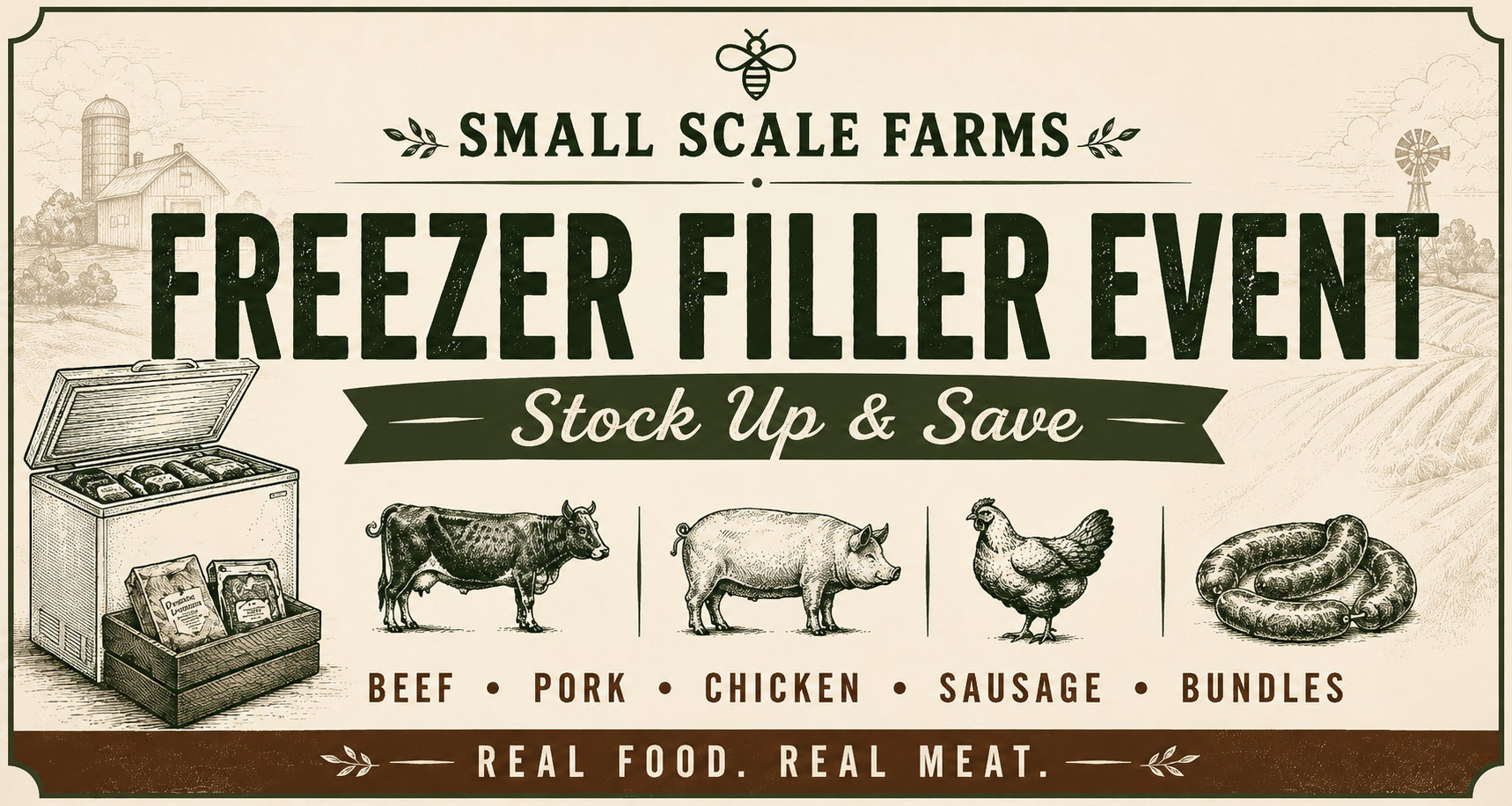
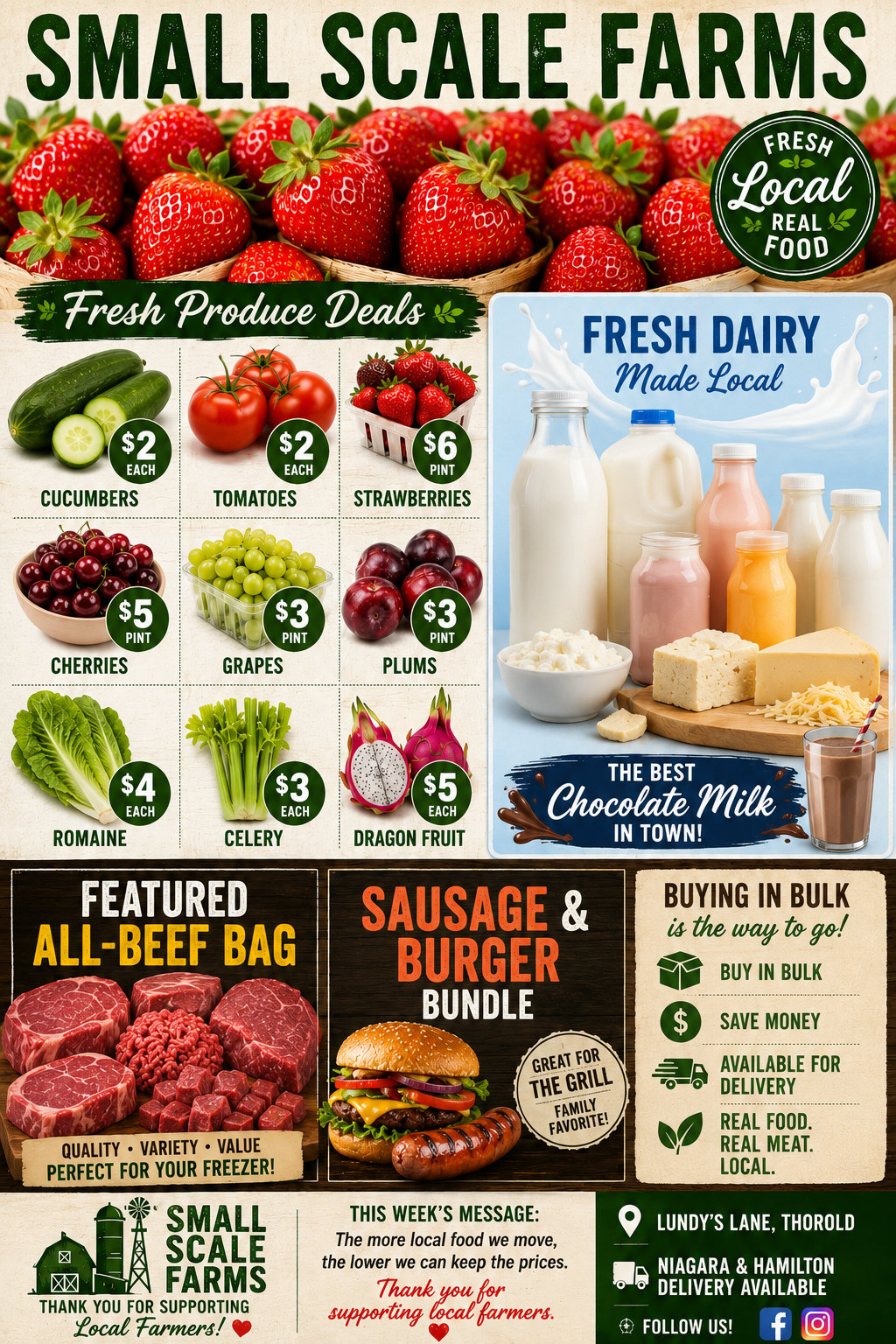
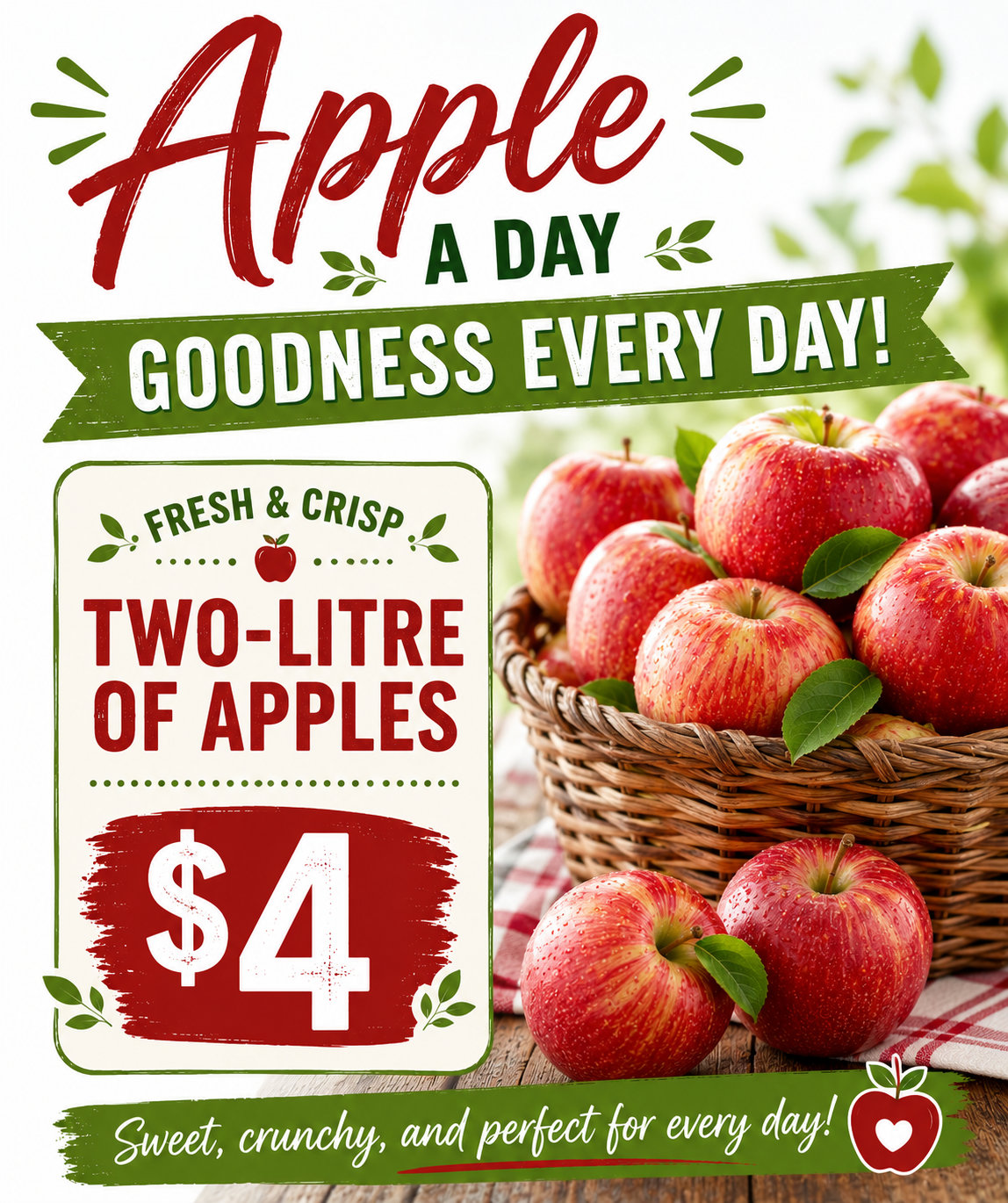
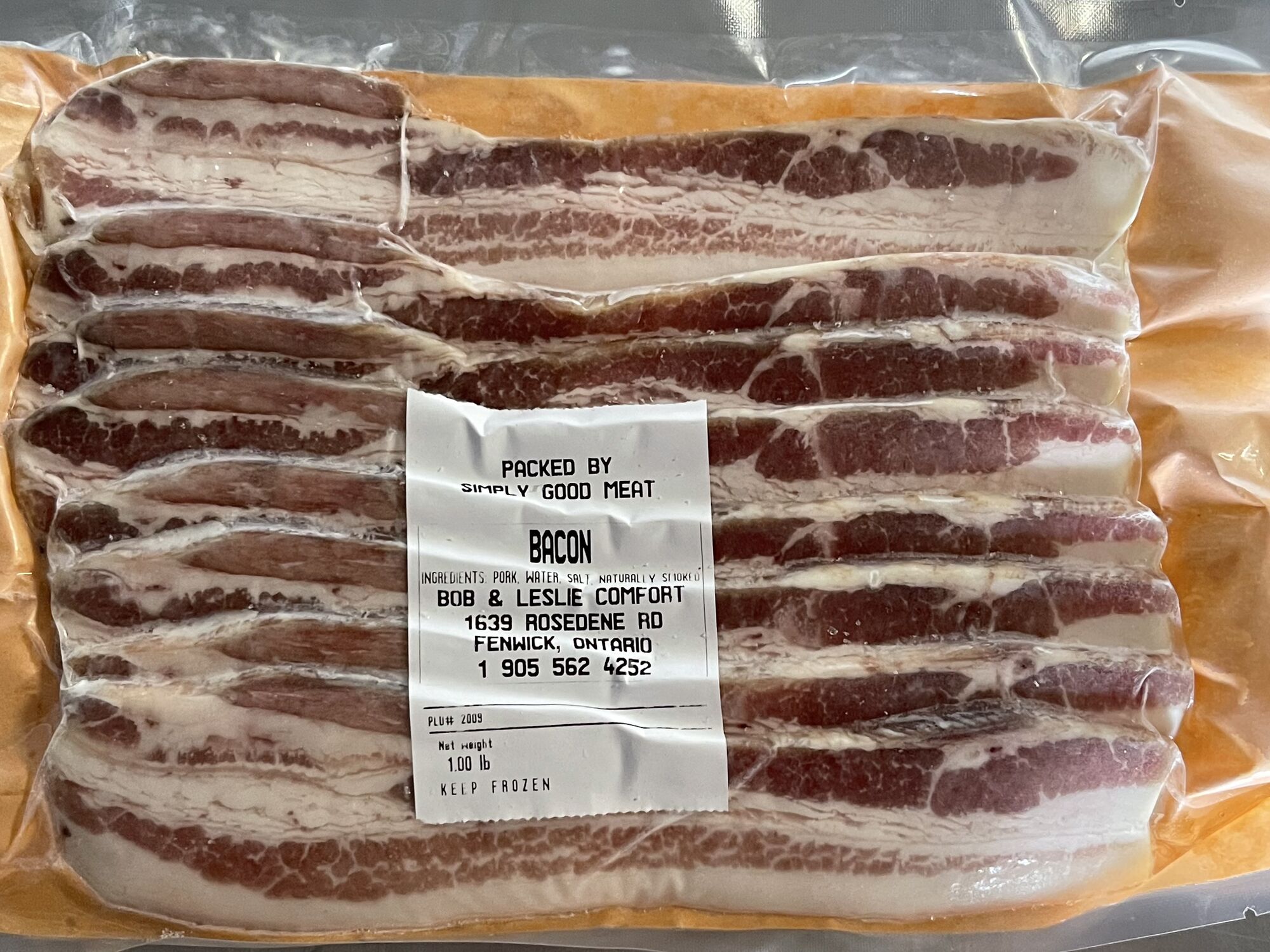
We have great deals on now at The Hub, while quantities last. Plus we have freezers full and our meat sampler bags fully stocked, so you can come try our meat and taste the difference for yourself.
We are open to the public Monday to Friday 9–5, Saturday 9–4, and Sunday 10–4 - 13145 Lundy's Lane
|
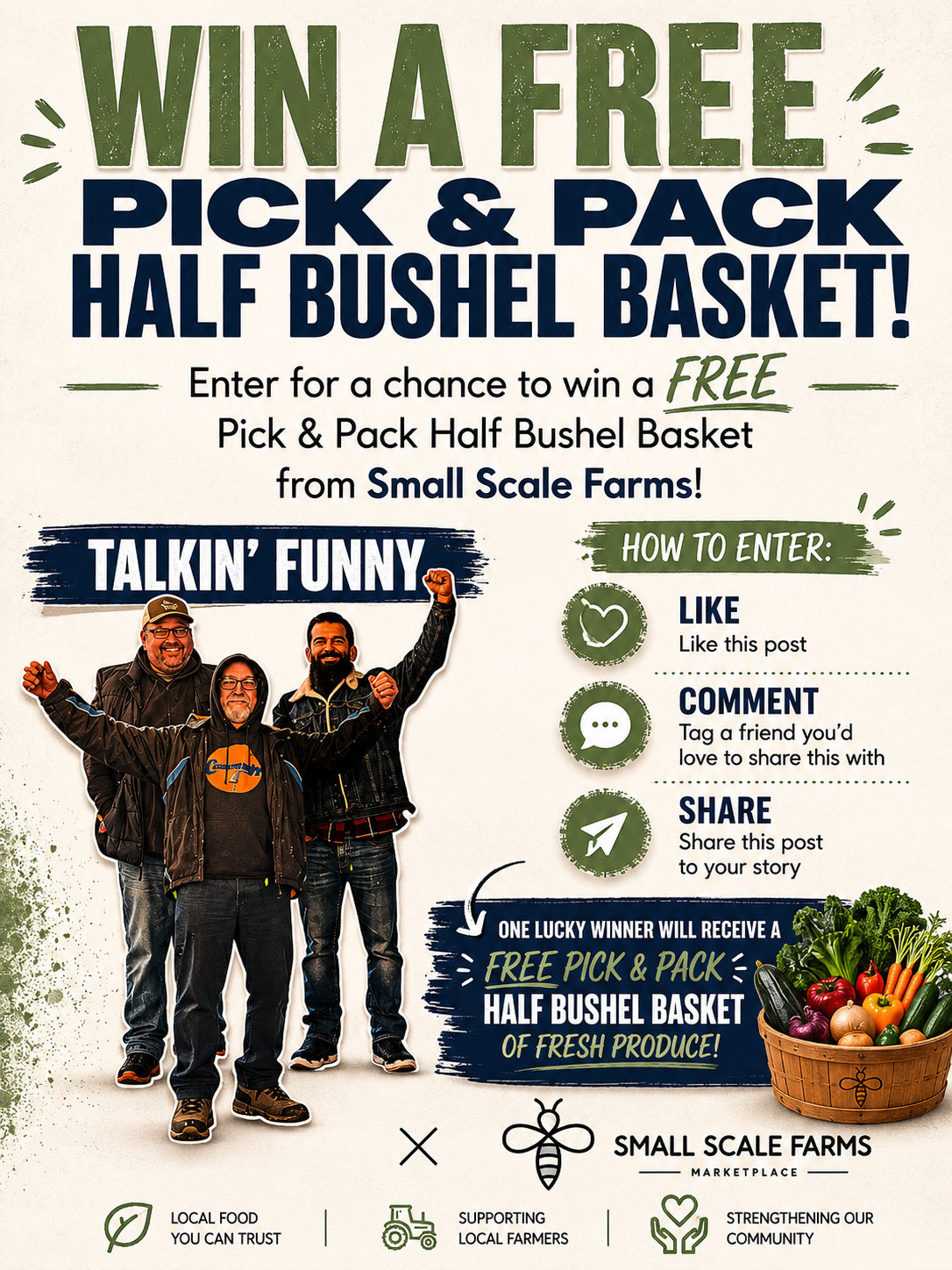
Huge Shout Out to Talkin Funny - I hear they are buying 2 Pick and Pack Basket's this week and giving them both away!
|
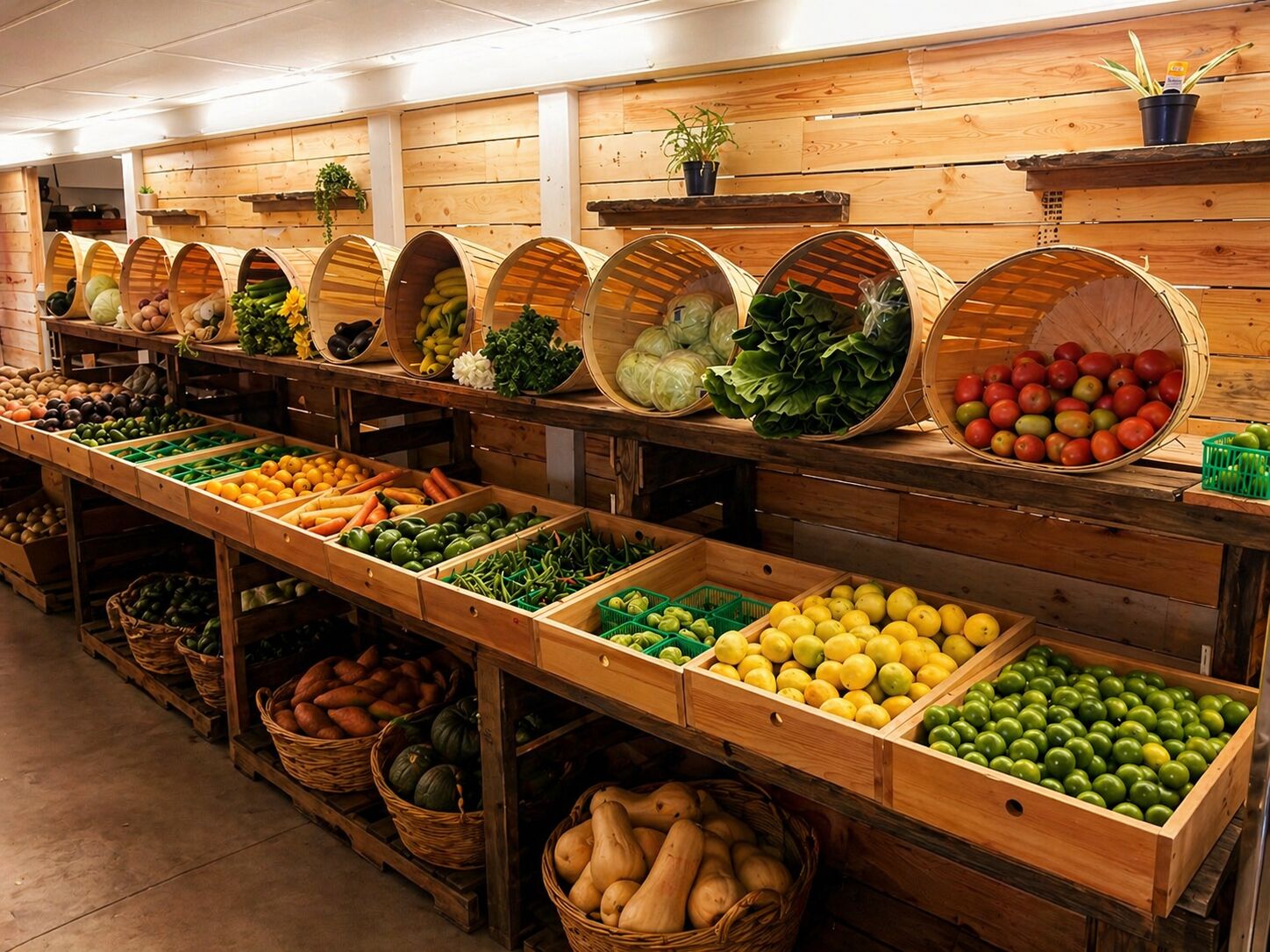
Our pick-and-pack section is the most affordable way to feed your family.
Come by and fill a half-bushel basket with whatever you'd like from this section, for just $30 - and it helps us keep food moving so nothing goes to waste and prices stay reasonable. Win win.
|
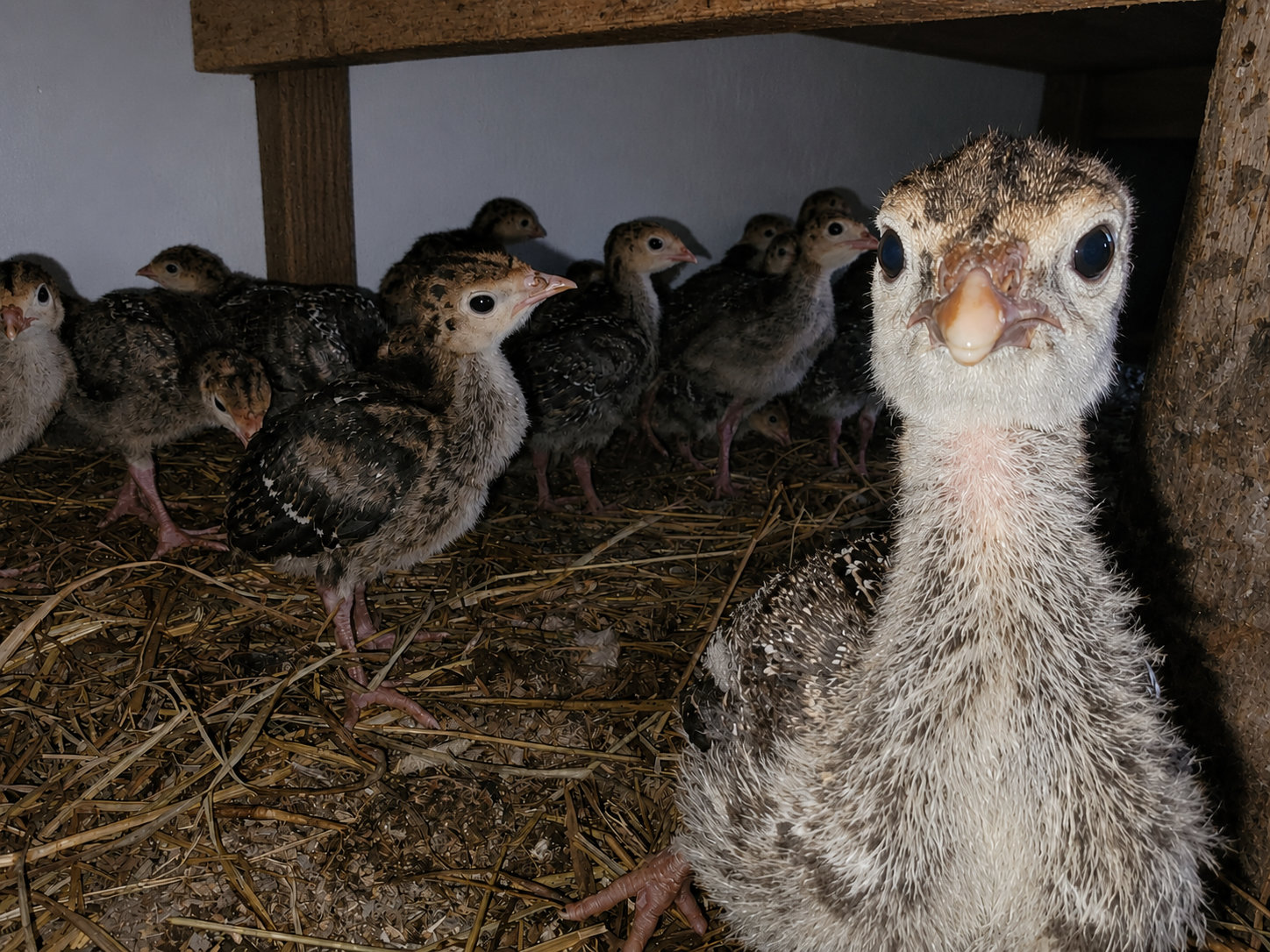
We’ve added Ridley Bronze turkeys to the farm this year.
They’re a heritage-style breed known for their striking bronze feathers, hardiness, and ability to thrive in more natural environments. Unlike many modern commercial turkey breeds, Ridley Bronze turkeys retain many of the characteristics turkeys were originally known for before agriculture became focused almost entirely on production.
I find breeds like this interesting because they remind us that not all animals are created for the same purpose. Some are selected for growth rate, while others are valued for traits like vigour, foraging ability, and their ability to adapt.
The more I learn about food and farming, the more I appreciate the importance of preserving genetics like these. That’s one of the reasons I’m grateful to breeders like Kiley Barron, who continue to raise and steward these birds. Once genetics are lost, they’re incredibly difficult to get back, and preserving them helps ensure future generations have options beyond what large-scale production systems
choose to keep.
|
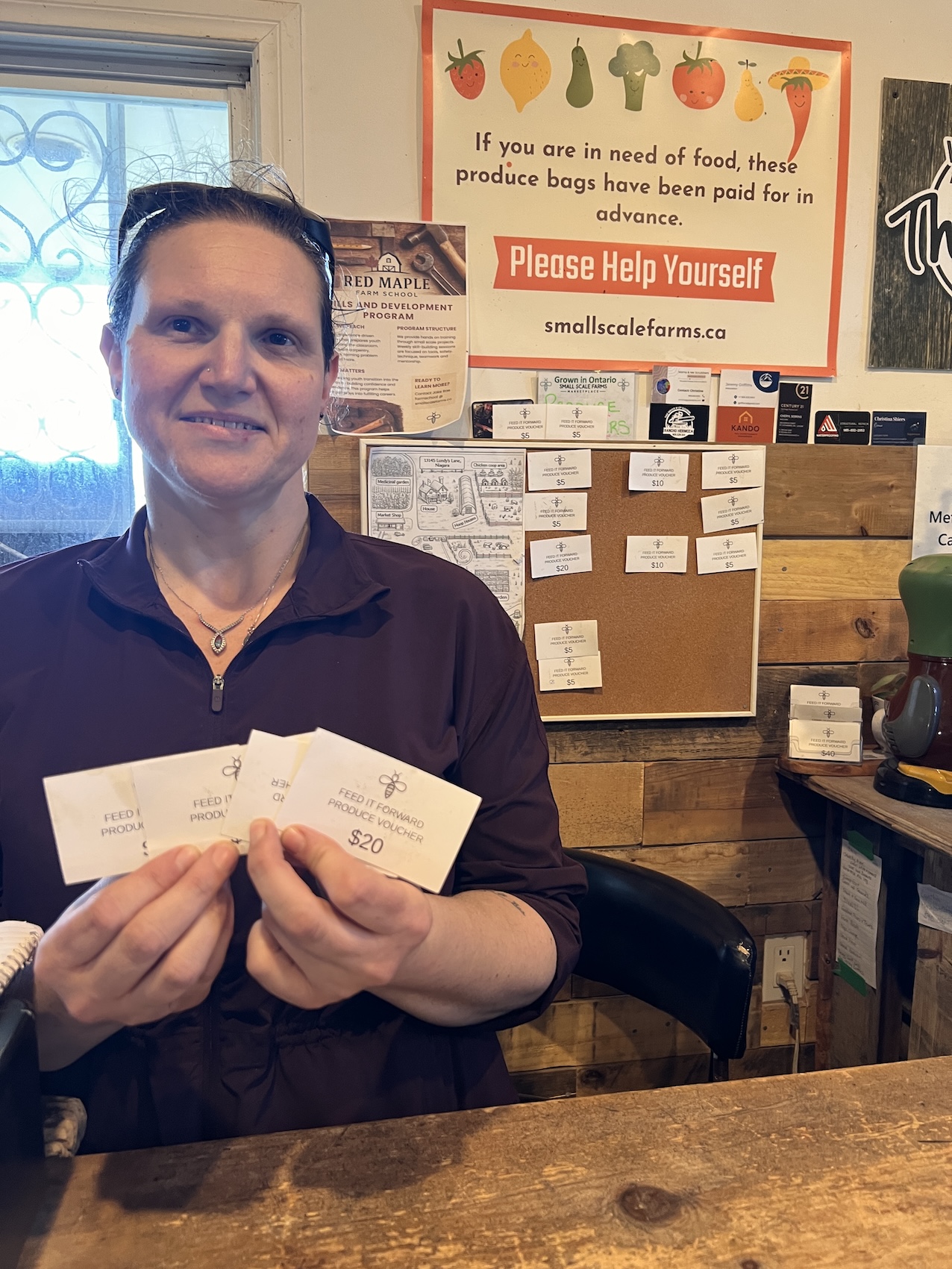
A community is built one person at a time, and this week Jennifer Kaplan showed exactly what that looks like.
Jennifer recently partnered with Small Scale Farms to help make fresh, local food more accessible in Niagara. Through her efforts, she raised $71 for our Community Bulletin Board Voucher Wall, helping provide healthy food to families who may be going through a difficult season. It’s easy to talk about community. It’s another thing entirely to step forward and do something about it.
Thank you, Jennifer, for believing that access to real food matters and for using your platform to help nourish our community. Your kindness will make a real difference for local families. 💚
|
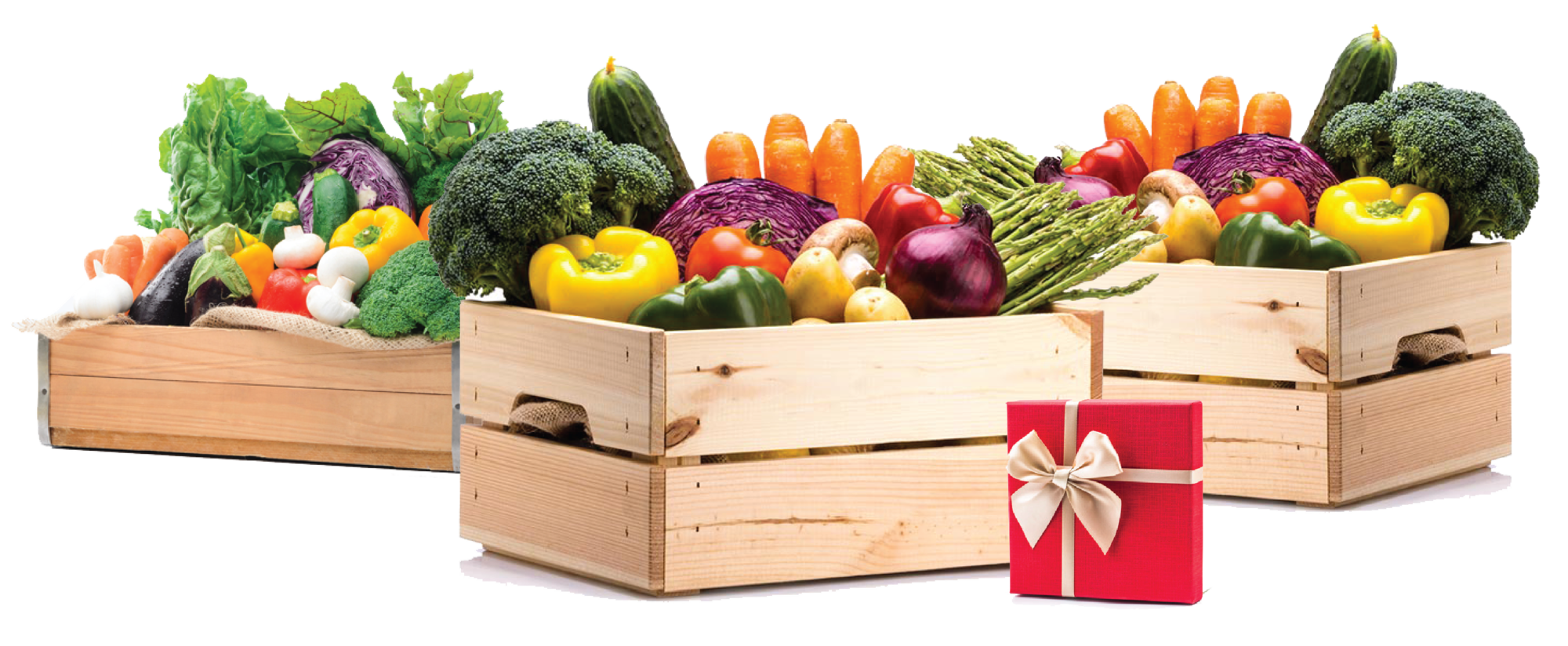
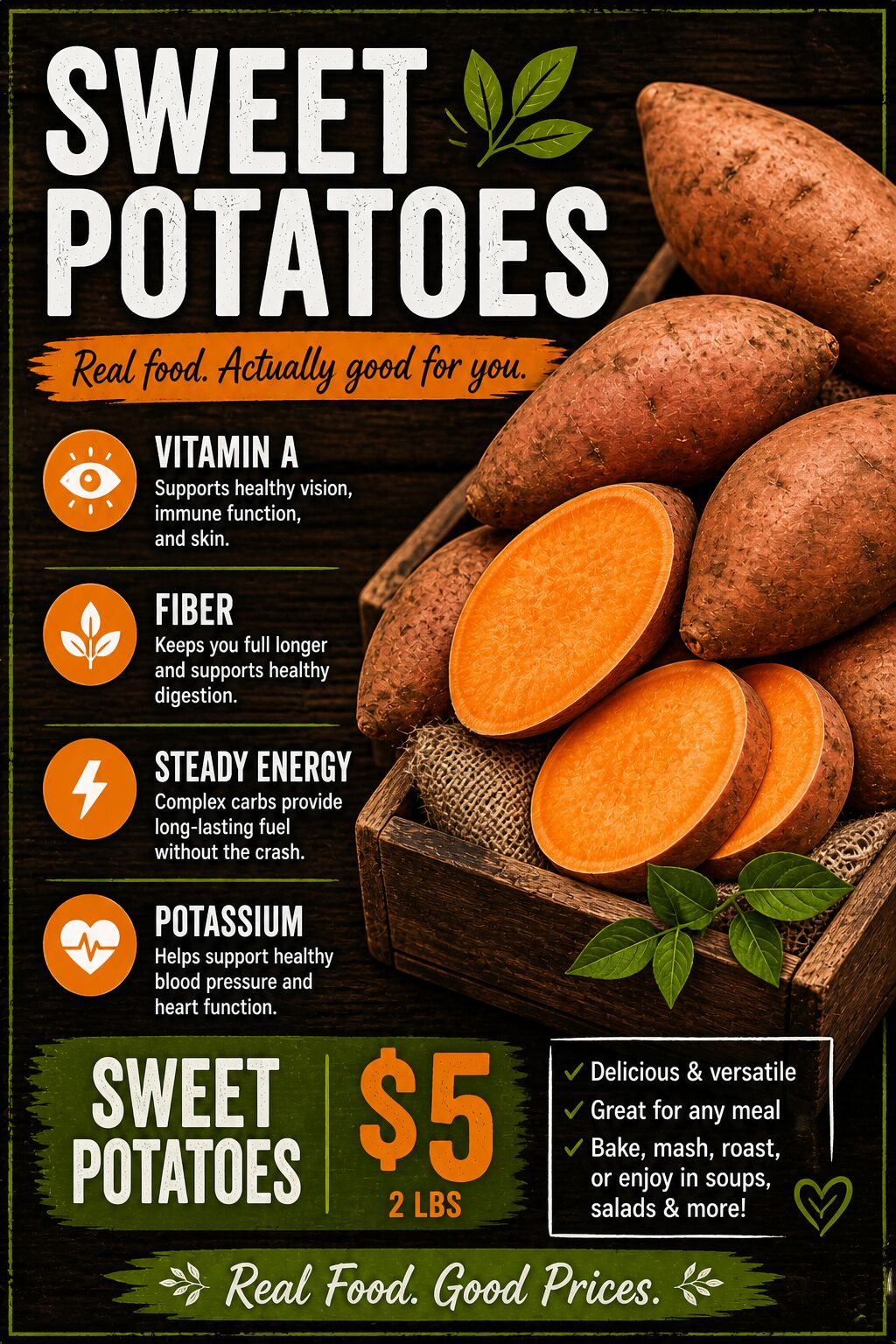
Real food, made easy. Add veggies to your order and we’ll bring it straight to your door.
Check out our vegetable section for free delivery.👇
|
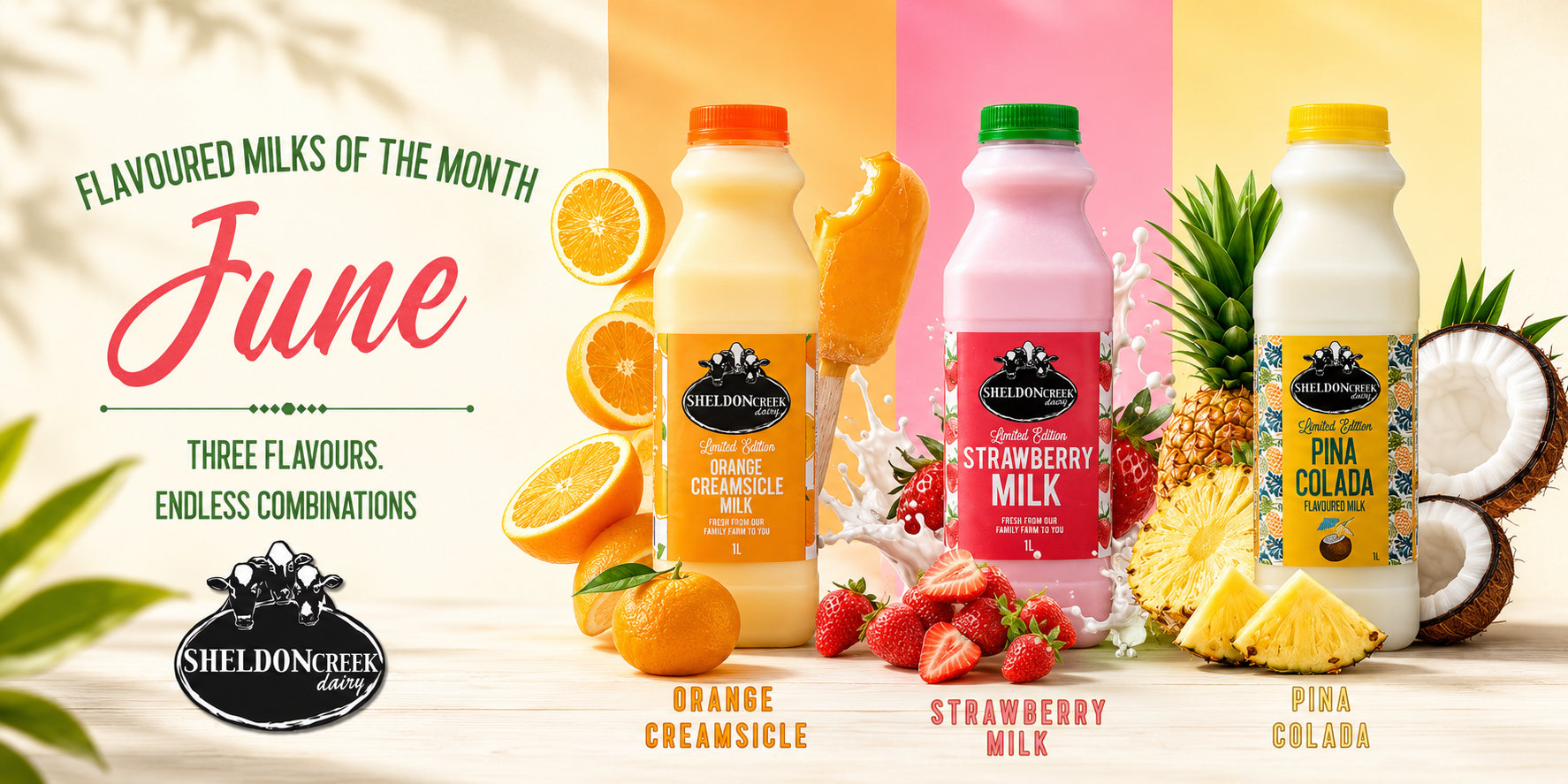
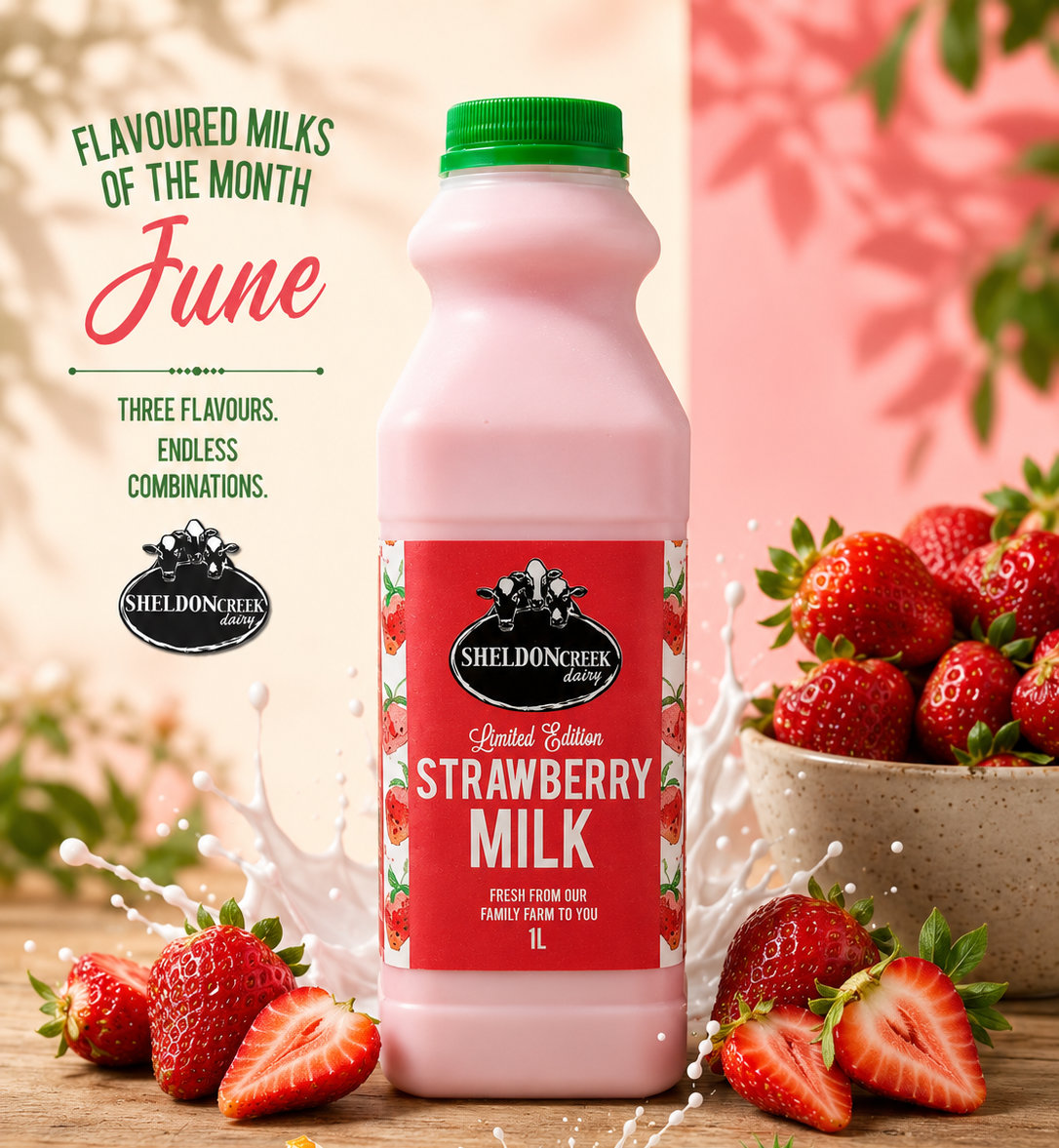
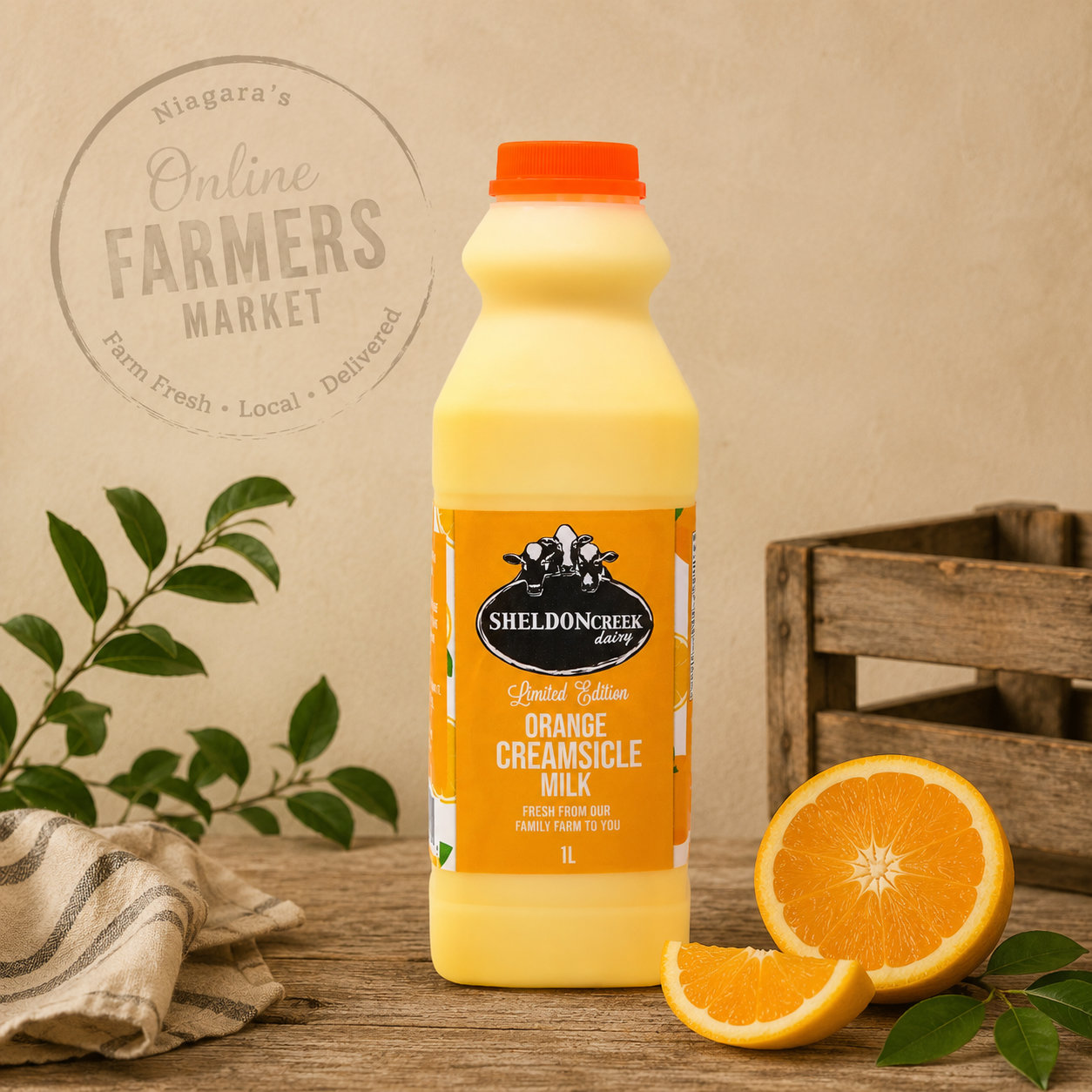
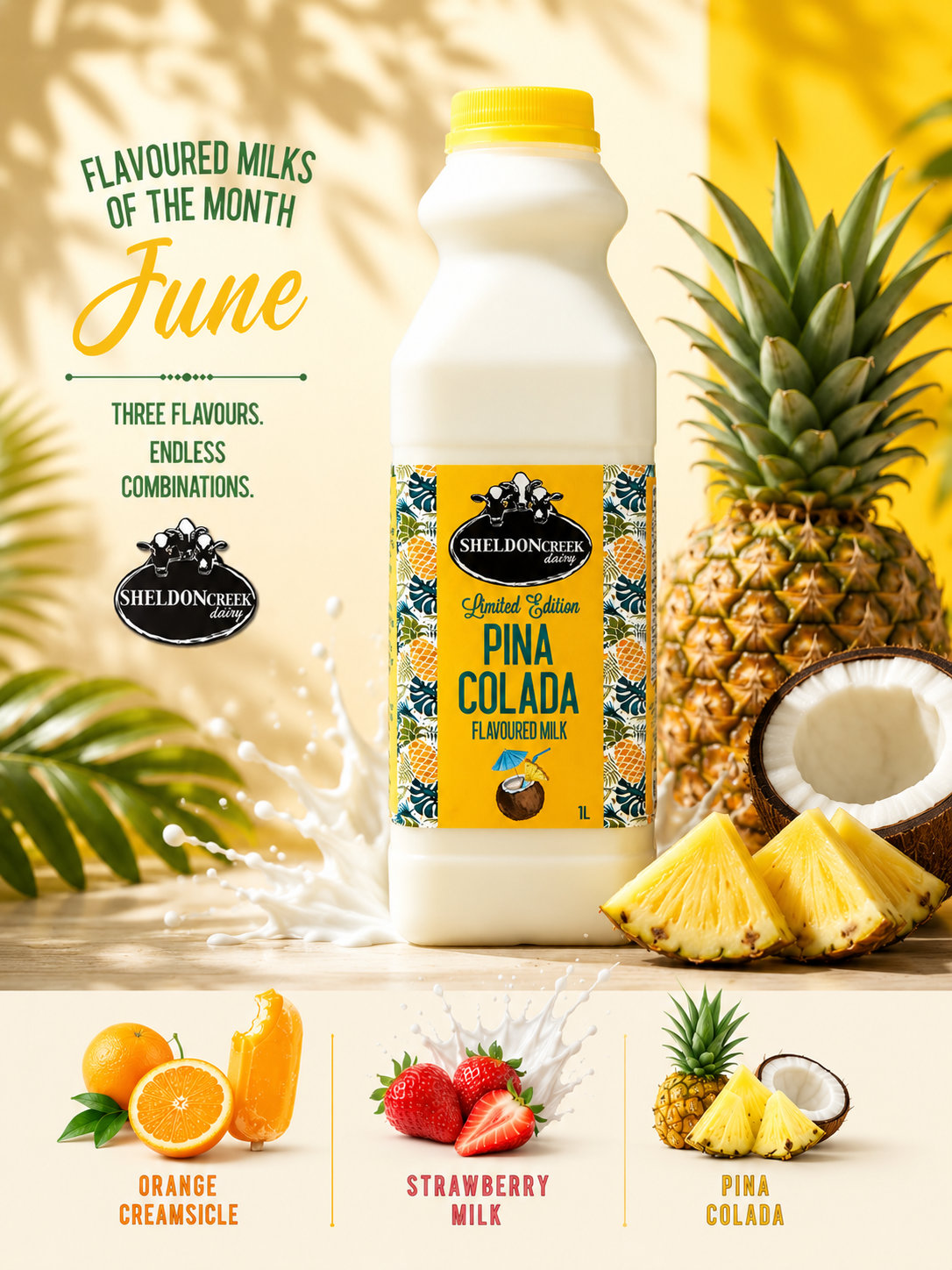
Please note: Our June delivery of flavoured milks will not arrive at the hub until Wednesday June 3rd. However, they will be here in time for all scheduled delivery orders, so feel free to place your order as usual.
|
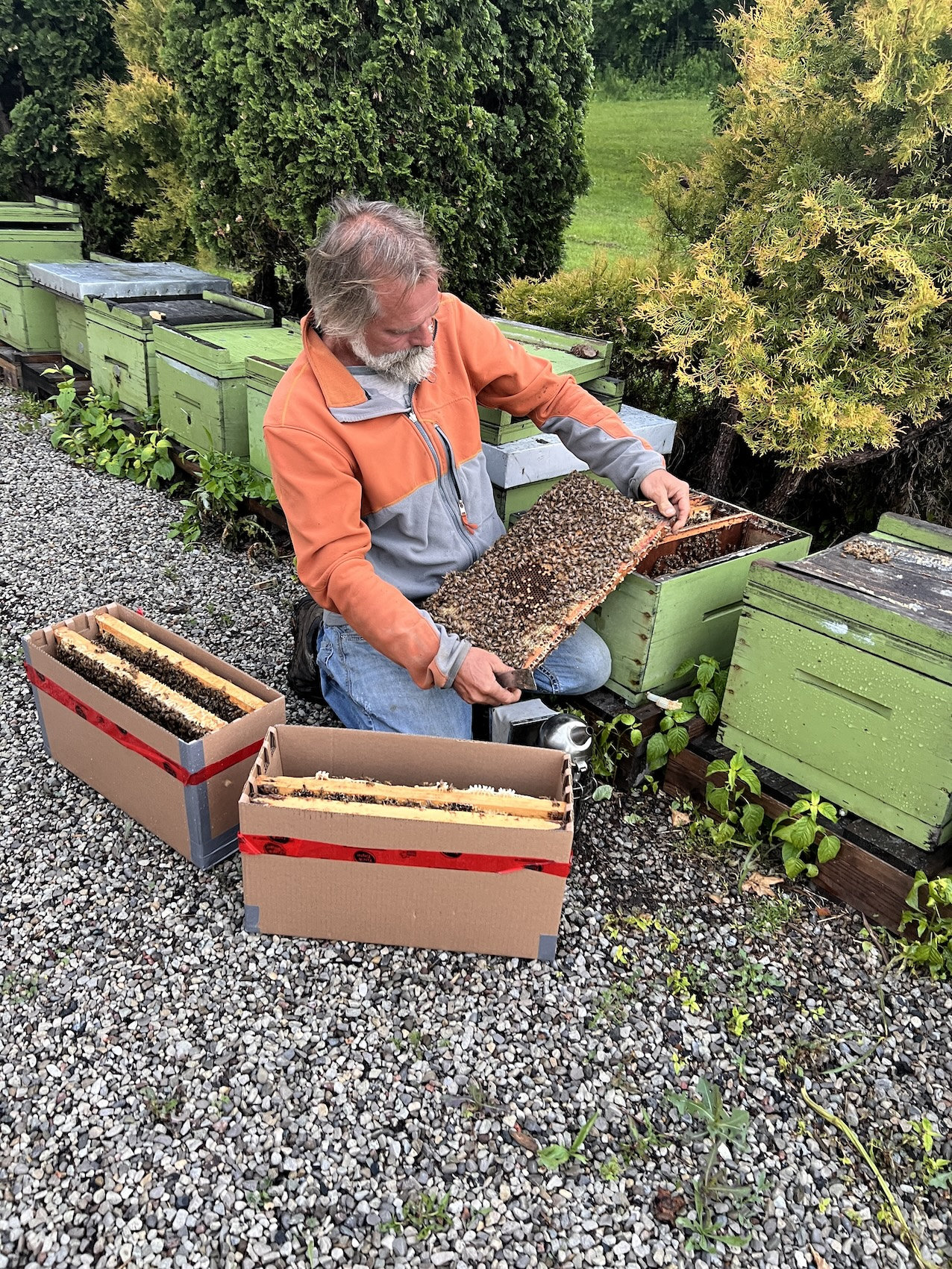
Last night I drove to Guelph to visit my friend Tibor Szabo and pick up a couple of nucs to replace hives that didn’t make it through the winter at Happy Rolph’s and Fairview Cemetery.
I’ve known Tibor for about ten years now, and every time we sit down together, I learn something. He’s a third-generation beekeeper whose father was a well-respected bee scientist. Bees have been part of his life for as long as he can remember, and he has devoted his entire life to understanding them, protecting them, and telling the truth about what’s happening to them.
The reality is that bees have been struggling for years.
Every year we hear another explanation. Another theory. Another report. But when you’ve spent enough time around people like Tibor, you begin to understand that biology doesn’t care about politics, public relations, or government talking points. Biology simply responds to the environment it’s given.
And bees are telling us something.
One of the most important things I’ve learned is that bees are what scientists call a bioindicator. In simple terms, they are an early warning system. When something is wrong in the environment, bees often show us first. They are connected to the soil, the plants, the water, the air, and the broader ecosystem in ways most people never think about.
When bees struggle, it should make us pay attention.
They’re also something else: a superorganism.
Most people think of a hive as thousands of individual bees. But that’s not really how it works. A hive functions as one living organism made up of many parts. No single bee understands everything happening in the colony, yet together they create something remarkable. They communicate, adapt, solve problems, defend themselves, raise young, and store food. The colony survives because every part is
connected to every other part.
The more I’ve learned about bees, the more I’ve realized that people aren’t all that different.
We like to think of ourselves as independent, but we’re deeply connected to one another and to the environment around us. The health of our communities, our food system, our farms, and our families are all linked whether we acknowledge it or not.
That’s why the decline of beekeeping matters.
Canadian beekeepers are being squeezed from every direction. They’re expected to compete against imported honey from countries with entirely different standards and production costs. Many struggle to make a living selling honey while also trying to keep colonies alive through increasingly difficult conditions.
For years, pollination contracts became a lifeline. Beekeepers loaded hives onto trucks and sent them across provinces to service orchards, berry farms, and other crops. But even that has become increasingly challenging.
At some point we have to ask ourselves a difficult question: if the people whose job is to care for pollinators are struggling to survive, what does that say about the future of our food system?
Because bees aren’t separate from our food system. They are part of it.
The conversation is bigger than honey. Bigger than beekeeping. Bigger than agriculture.
The bees are showing us that everything is connected.
Our health is connected to the health of the soil.
The soil is connected to the health of our plants.
The plants are connected to our pollinators.
And our pollinators are connected to the food that ends up on our plates.
For me, every conversation with Tibor is a reminder that understanding nature requires humility. It requires us to observe instead of assuming, to question instead of repeating, and to follow the evidence wherever it leads.
The bees have been speaking for years.
The question is whether we’re finally ready to listen.
|
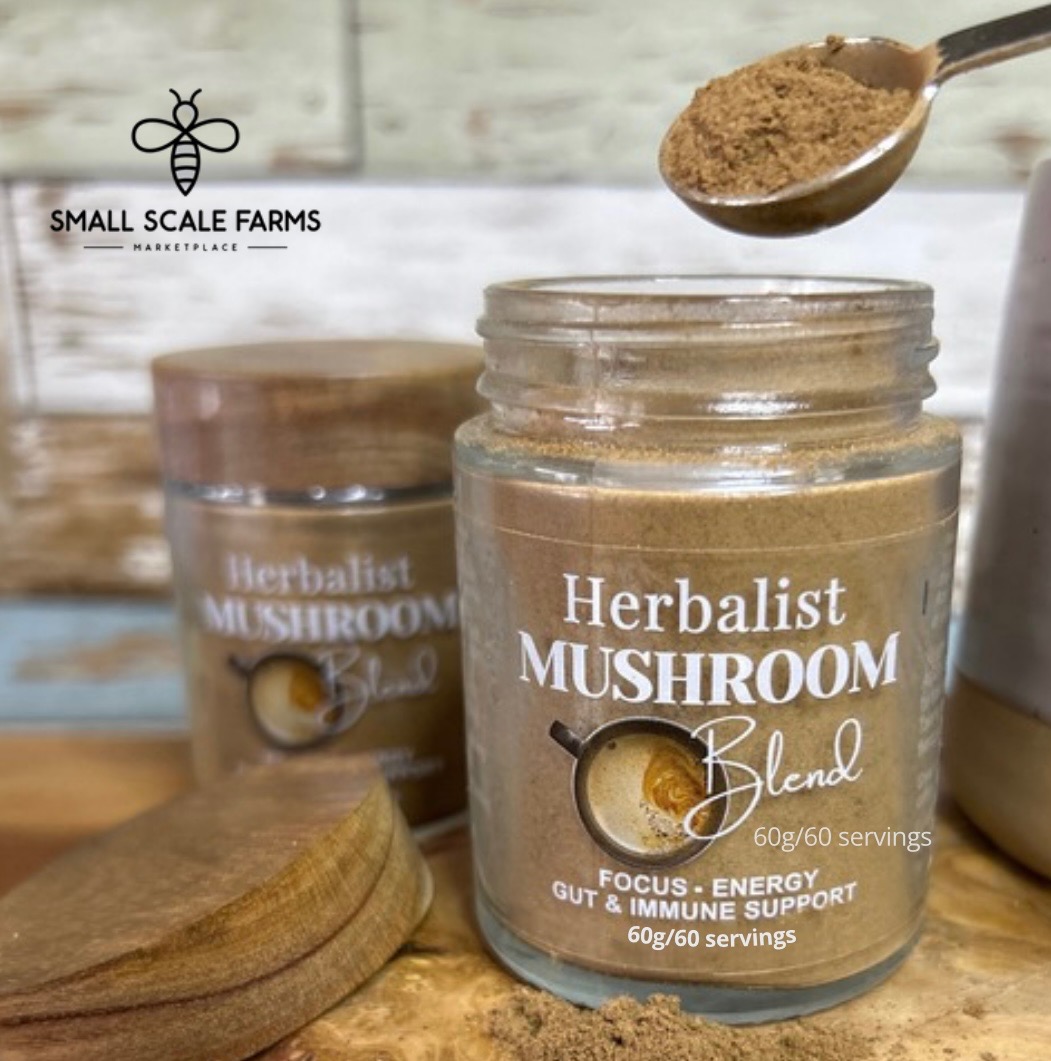
Locally made mushroom blend designed to support energy, focus, and overall wellness — an easy way to add functional mushrooms into your daily routine.
|
Eeee! Larry gave me some wormwood! I put it right at the entrance to the medicinal garden so I can watch it grow...
|
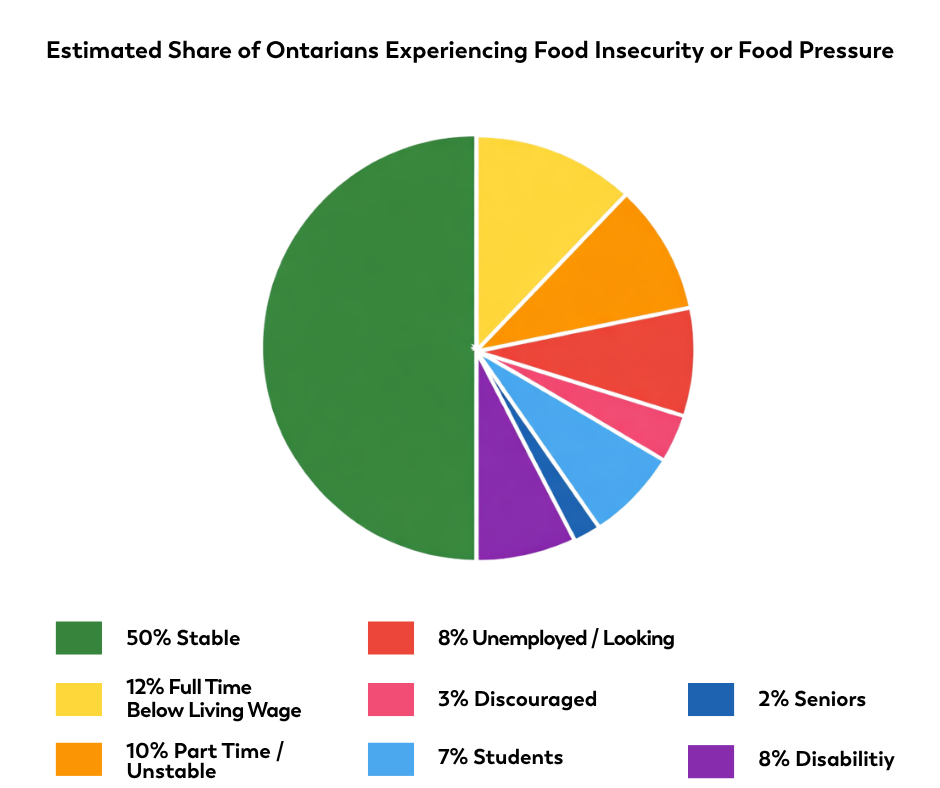
A few weeks ago, I wrote about a pie graph I had been building around poverty in Ontario.
The reason I started doing it was simple: I felt like we weren’t actually seeing the real numbers anymore.
So I started digging into the statistics myself.
How many people are on social assistance? How many are on EI? How many are working part time? How many are considered “working poor”? How many people are technically employed but still struggling to survive?
I wanted to understand the actual economic makeup of the province - not politically, not emotionally, but mathematically.
And before I even touched what we traditionally call the “middle class,” I had already landed at nearly 50% of the population living in poverty, near-poverty, or economically fragile conditions.
But after sitting with it longer, I realized I had left something major out of the equation:
The middle class.
And honestly, I shouldn’t have.
Because the more I thought about it, the more I started realizing that the middle class may actually be in deeper danger than many people officially categorized as “poor.”
Not because they necessarily make less money. But because they have more debt.
Massive debt.
Mortgages. Lines of credit. Car payments. Credit cards. HELOCs, (home equity line of credit). Consumer financing. “Affordable” monthly payments stretched over years.
For decades, credit created the illusion of stability. It allowed people to maintain a middle-class appearance long after real purchasing power began collapsing. And now the cracks are starting to show.
A recent federal report stated that nearly 50% of Canadians belong to the middle class. But that definition becomes increasingly disconnected from reality when you compare incomes against modern housing costs, food inflation, insurance, fuel, taxes, and debt servicing.
Statistics Canada data shows Ontario’s median household income sits around $91,000 before tax. On paper, that sounds solid. Years ago, that would have represented stability. Today, in many parts of Ontario, that income barely sustains a mortgage, groceries, utilities, transportation, childcare, and debt repayments.
Meanwhile, what’s considered “middle class” in Canada is often defined as households earning roughly between $57,000 and $115,000 annually.
But here’s the uncomfortable truth nobody wants to say out loud:
A household can technically be “middle class” while being one missed paycheck away from collapse.
That isn’t stability. That’s leveraged survival.
And we’re starting to see the cultural indicators everywhere.
Travel is one of the clearest examples because vacations are often the first thing families cut when economic pressure rises. Recent reporting shows Canadian travel demand continues to weaken significantly. Statistics Canada reported Canadian return trips from the U.S. fell again in early 2026, continuing a long downward trend. Other reporting found Canadian visits to U.S. metropolitan areas dropped as much as 42% year-over-year.
At the same time, surveys show many Canadians are avoiding travel altogether because they simply cannot justify the expense anymore.
That matters because the middle class has historically been the economic engine of discretionary spending.
When the middle class stops traveling, stops renovating, stops eating out, stops supporting local businesses, and starts pulling back in fear, the ripple effects move through the entire economy.
And I think that’s the stage we’re entering now.
What concerns me most is that many people still believe poverty looks like homelessness or visible desperation. But modern poverty often looks very different.
It looks like families carrying enormous debt while appearing “fine.” Two-income households unable to get ahead. People avoiding grocery stores because prices trigger anxiety. Parents quietly skipping meals. Adults with decent jobs unable to buy homes. Households financing basic necessities. People one interest-rate increase away from disaster.
In many ways, the middle class became the buffer zone holding the entire economic structure together. And if that buffer collapses, society changes very quickly — not just economically, but socially, psychologically, and politically.
Because once people realize they followed all the rules and still can’t build security, trust in the system starts to erode.
That’s why I keep coming back to local systems. Local food. Local production. Local relationships. Local resilience.
Because the larger the systems become, the more fragile ordinary people become inside them.
And maybe that’s the real story unfolding beneath the headlines right now: not simply that poverty is growing, but that the line between “middle class” and “poverty” is disappearing altogether.
Locally yours,
Small Scale Farms
|
|
|
|
|
|
|
|