Why Food Hubs Matter — And Why We Need to Pay Attention to Who Builds Them
If we want to build a more local food system, we need to start talking about food hubs.
I also think you’re going to start hearing those two words a lot more.
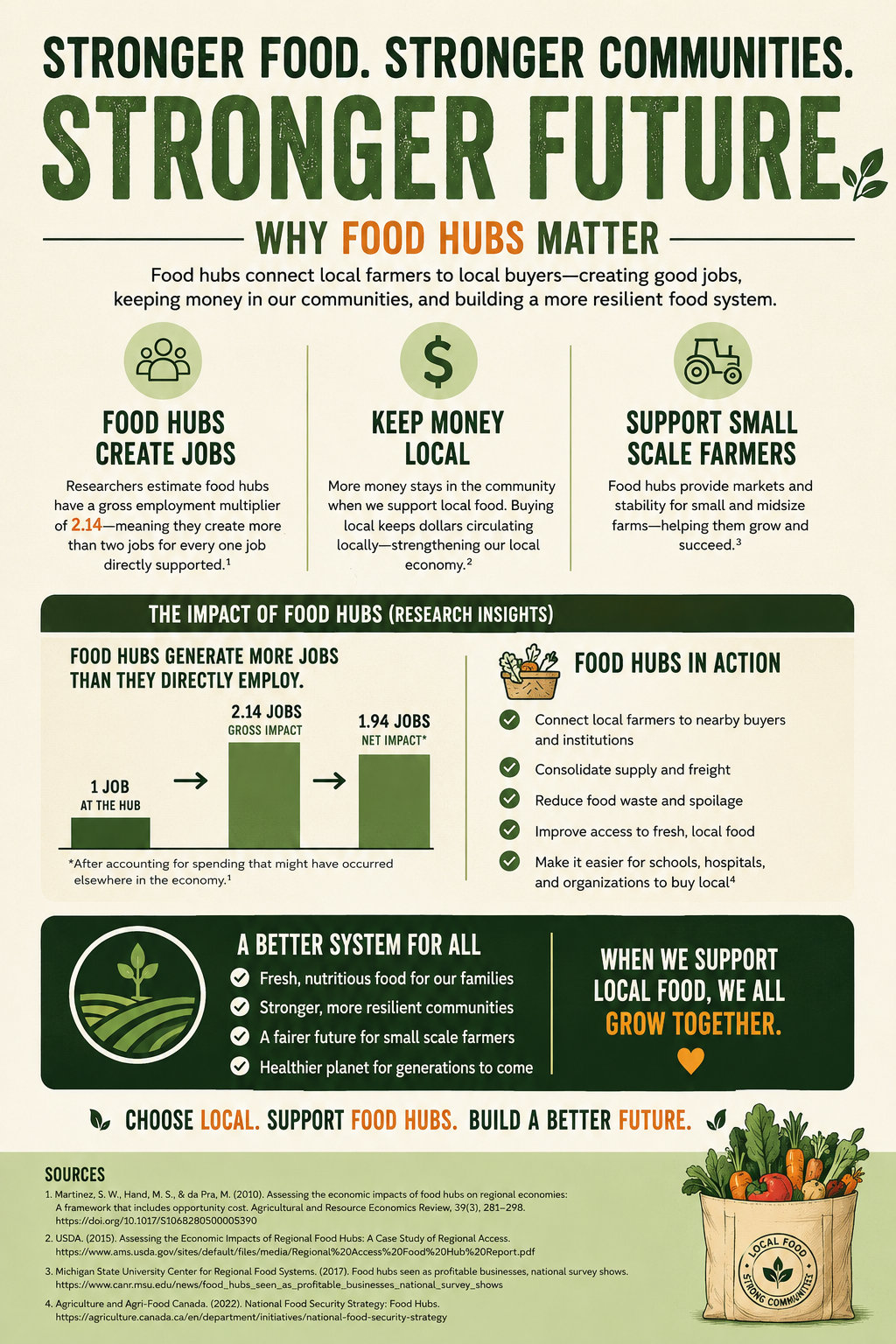
The Government of Canada is already using the term in its National Food Security Strategy. It specifically identifies commercial food hubs as distribution nodes that can connect local producers with nearby buyers, consolidate supply and freight, reduce spoilage, improve access to locally produced food, and make it easier for institutions and other larger purchasers to buy from smaller
suppliers.
Government of Canada — National Food Security Strategy
On the surface, that’s exactly what we need.
But I think we need to pay very close attention to what we mean when we say food hub.
Because putting the words local or food hub on a building doesn’t automatically create a local food system.
As governments, institutions and consumers begin putting more emphasis on local food, there is a real possibility that larger corporations will move into this space too. A company can create a distribution centre, source some products locally, use pictures of farms and farmers in its marketing and call itself a food hub.
Technically, it might fit someone’s definition.
But that isn’t necessarily the change I’m talking about.
The goal isn’t to recreate the same centralized food system under a friendlier name.
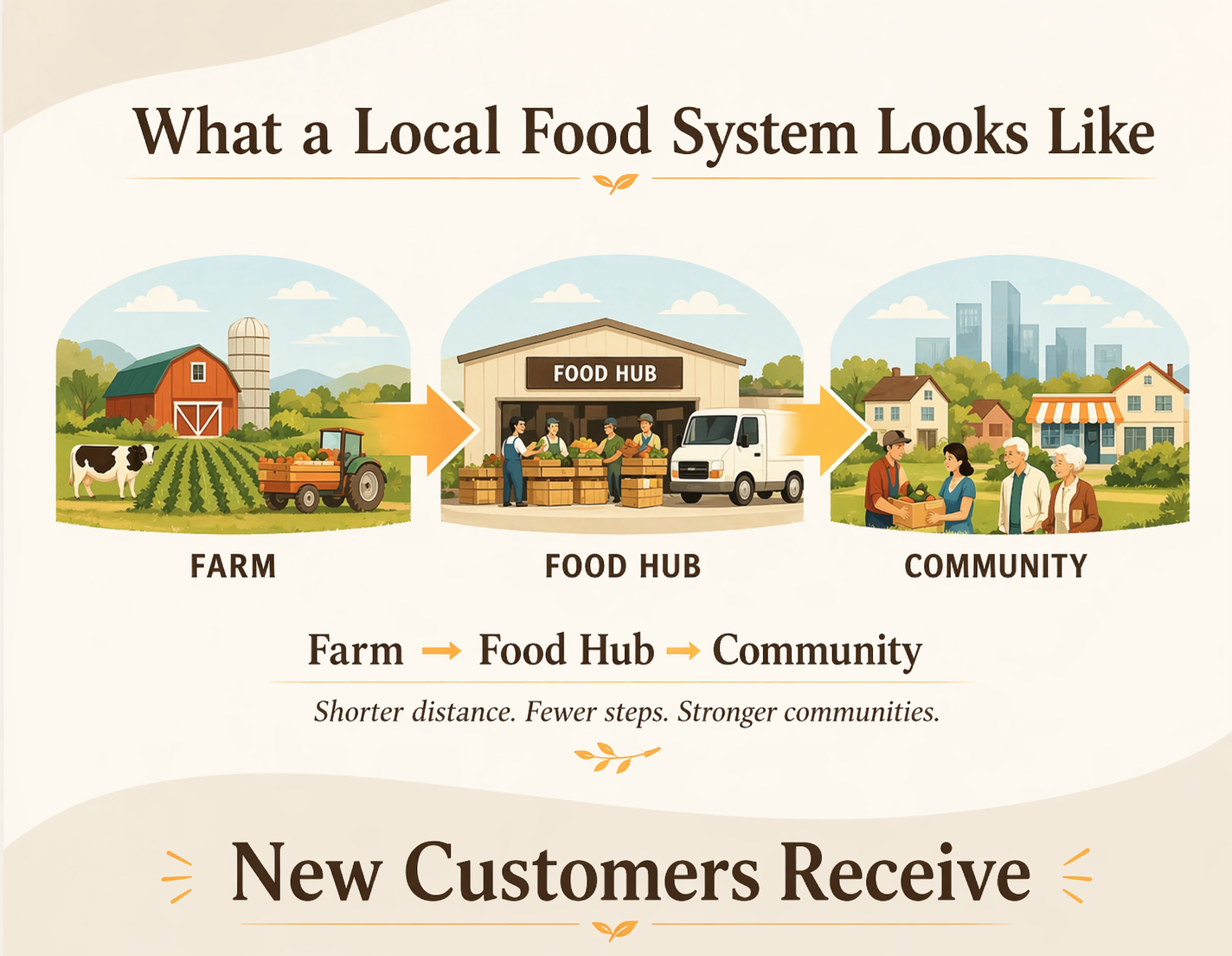
The opportunity is to build genuinely local infrastructure: locally owned food hubs, operated by local small businesses, supplied by local small-scale farmers and serving the communities around them.
There is research showing why this infrastructure matters.
Peer-reviewed research published in the Agricultural and Resource Economics Review examined the economic impact of a regional food hub. Researchers estimated a gross employment multiplier of 2.14. After accounting for economic activity that may have simply shifted from elsewhere in the economy, the employment multiplier was still 1.94.
Peer-reviewed study — Agricultural and Resource Economics Review, Cambridge University Press
The USDA has also studied the economic impact of regional food hubs and their role in connecting producers, buyers and regional economies.
USDA — Assessing the Economic Impacts of Regional Food Hubs
There is also evidence that food hubs can create meaningful markets for small and midsized farms. A national food-hub survey found that the average hub worked with 80 producers, had 19 paid positions and generated more than $3.7 million in average annual sales.
That matters because one of the biggest challenges facing small-scale farmers isn’t simply growing food.
It’s everything that comes after.
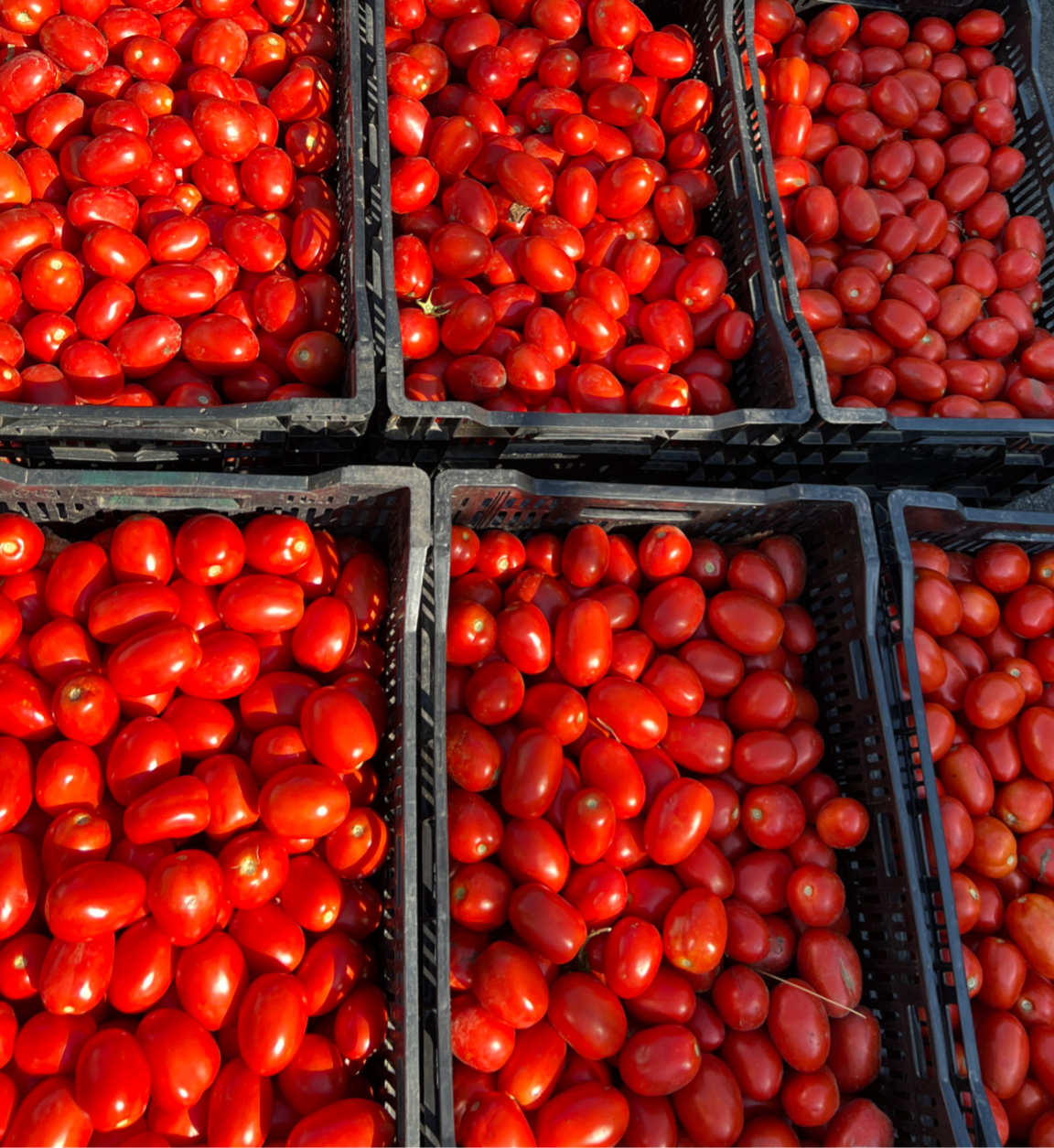
A farmer can grow 50 cases of tomatoes. But then what?
They need customers. They need refrigeration. They need transportation. They need someone taking orders. They need somewhere to deliver those tomatoes. And they need enough consistent demand to make growing the next 50 cases worthwhile.
A food hub can become that bridge.
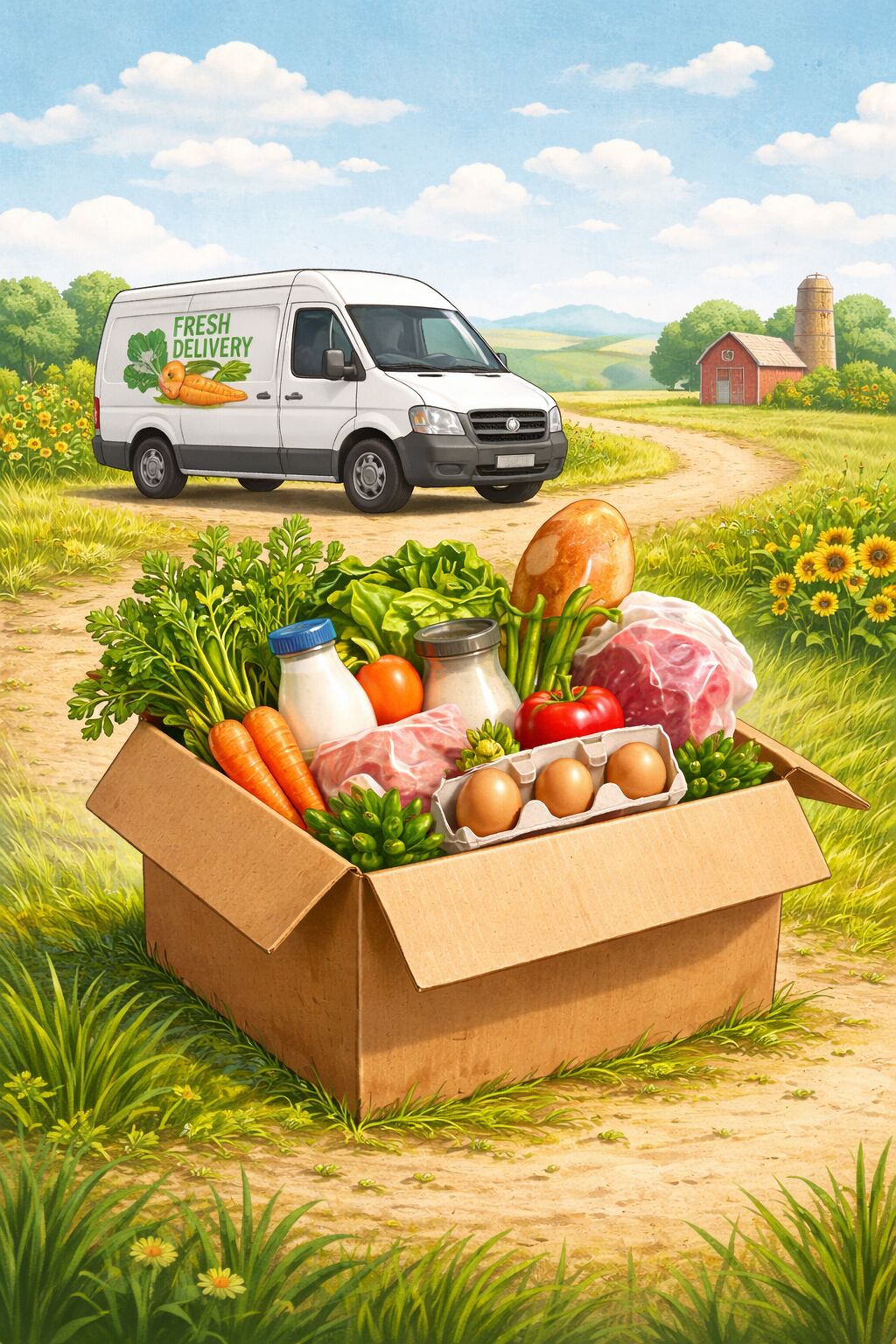
Instead of expecting every farmer to become a grower, retailer, marketer, warehouse operator and delivery company, we can create local infrastructure that connects many small farms to many local customers.
And this is where I believe we need to be careful about the direction we take.
Who owns the hub matters.
Who supplies the hub matters.
Where the money goes matters.
How far the food travels matters.
And whether we’re actually creating opportunities for small-scale farmers matters.
If one enormous corporation operates hundreds of “local food hubs,” controls purchasing, determines prices and moves food through another centralized supply chain, have we really changed the food system?
Or have we simply changed the sign on the building?
That’s the conversation I think we need to start having now, especially as the term food hub becomes more common.
When I talk about food hubs, I’m talking about something much more grassroots.
I’m talking about communities having their own food infrastructure.
Local entrepreneurs operating hubs. Small farms surrounding them and supplying them. Local people working in them. Restaurants, schools, businesses and families buying through them. Food moving shorter distances whenever possible. And money circulating through many independent farms and businesses instead of continually flowing toward a handful of enormous corporations.
We don’t simply need to tell people to buy local.
We have to make buying local easier.
We need more small-scale farmers. We need aggregation. We need cold storage. We need distribution. We need local processing. We need reliable markets. And we need food hubs capable of connecting all of those pieces.
The centralized food system we have today didn’t appear overnight. We spent decades building the infrastructure that made it possible.
If we want something different, we have to build the infrastructure for that too.
So when you start hearing the words food hub more often, don’t stop at the name.
Ask who owns it.
Ask where the food comes from.
Ask how many small local farms it supports.
Ask where the money goes.
Because the goal isn’t simply to build more food hubs.
The goal is to build a genuinely local food system.
One owned by communities, powered by small businesses and fed by small-scale farmers.
That’s the difference that matters.
|